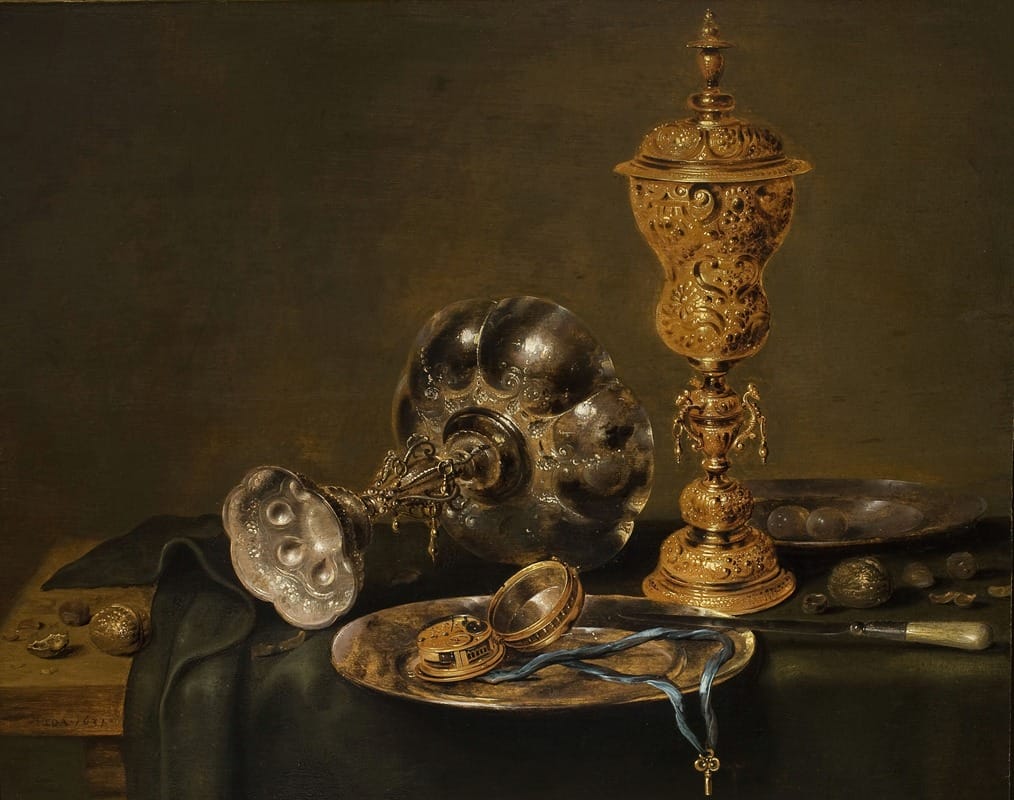

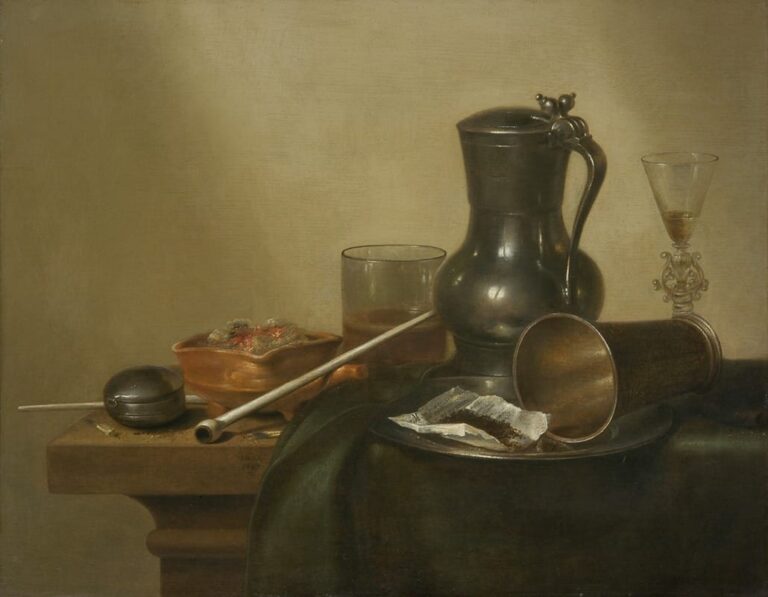
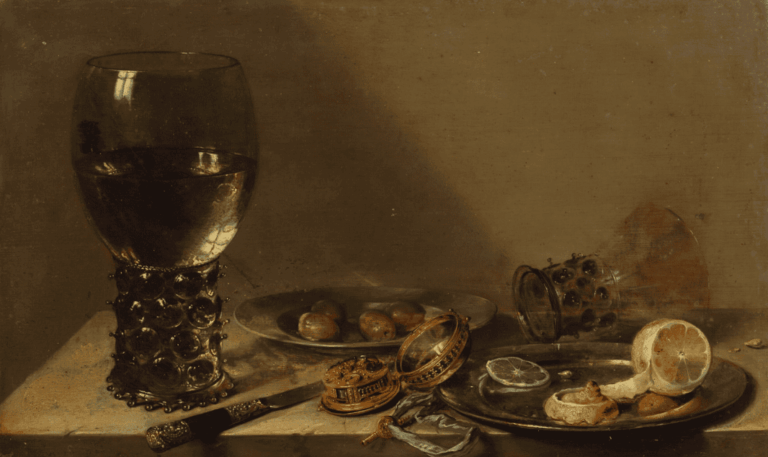
Our Dafen artist studio focuses on distinguishing different metallic surfaces. Painters capture the varied sheen of polished metal vessels and the fine details of the watch case, alongside subtle folds of the table drapery. The reproduction respects Heda’s smooth tonal transitions, keeping shadows soft and highlights restrained. We avoid harsh contrast that would disrupt the quiet, contemplative atmosphere central to his early still-life practice.
Interior Styling Suggestions
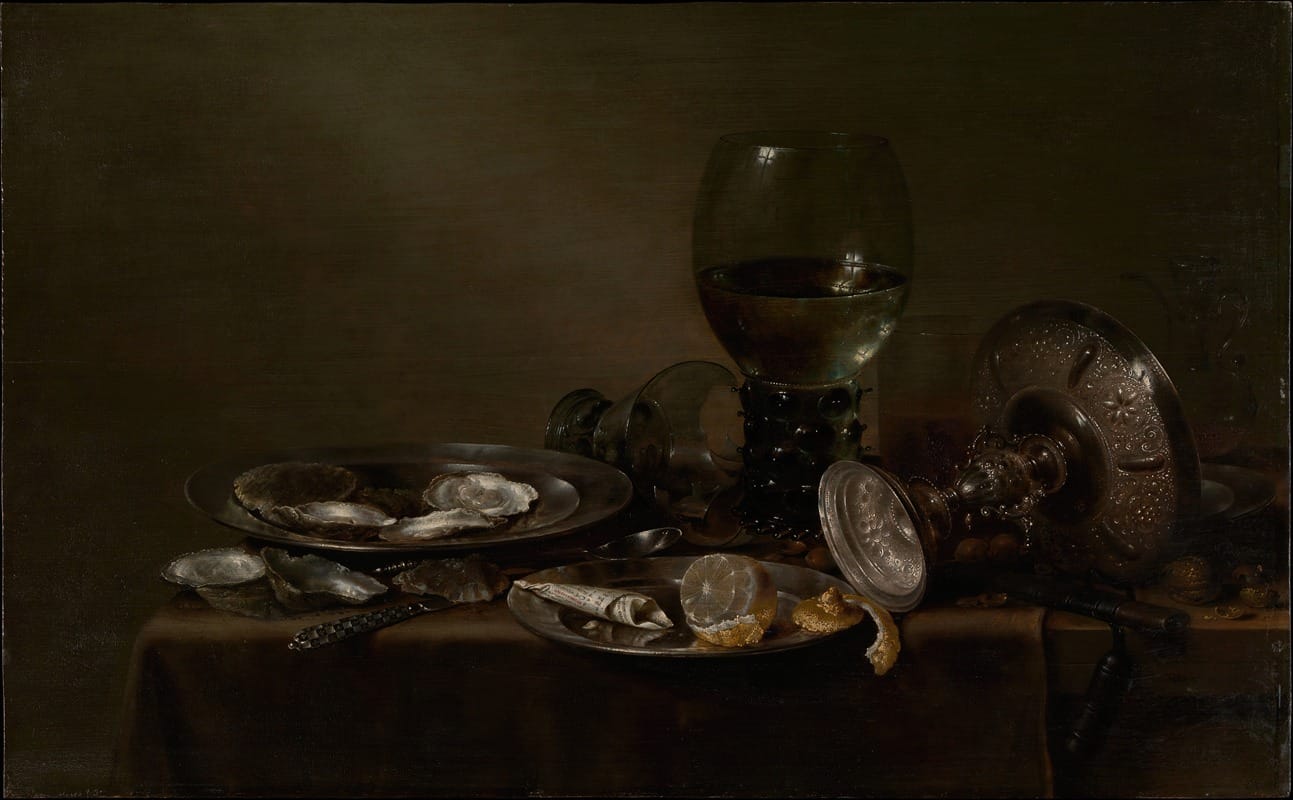
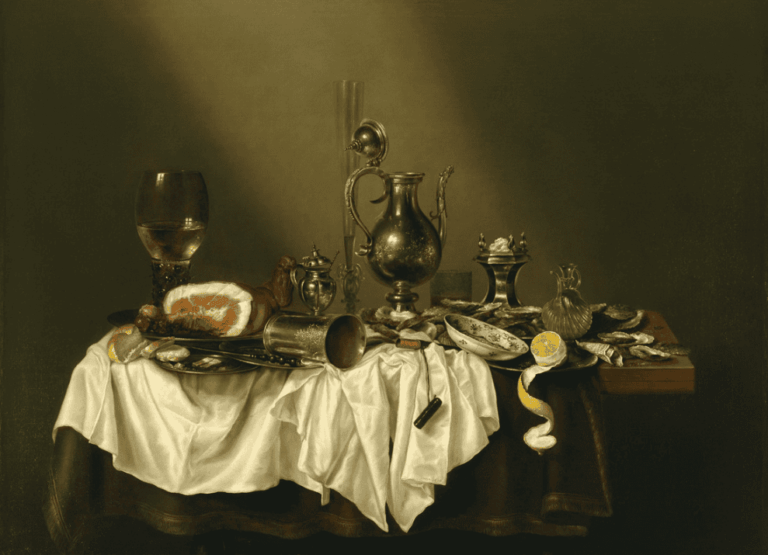
This refined horizontal still life suits traditional studies, library walls, transitional dining spaces and curated entry nooks. Warm stone grey, muted taupe and soft sage wall tones complement its subdued earth palette. It works well as a standalone accent or paired with other Heda watch and metalware still lifes, to observe his recurring vanitas motifs and evolving handling of light.
Heda’s Early Tonal Realism
Dated 1631, this work comes from the formative phase of Heda’s career. He had already mastered the restrained tonal language of Haarlem still life, prioritising subtle light observation over bright, theatrical colour, setting him apart from more ornate banquet painters of the Dutch Golden Age.
Key Details
- Artwork: Still Life with Metal Vessels and a Watch on a Table, 1631
- Artist: Willem Claesz Heda (Dutch, 1594–1680)
- Type: hand-painted oil reproduction, not original artwork
- Style: Dutch Golden Age still life, tonal realism, vanitas
- Original medium: oil on panel




Reviews
There are no reviews yet.