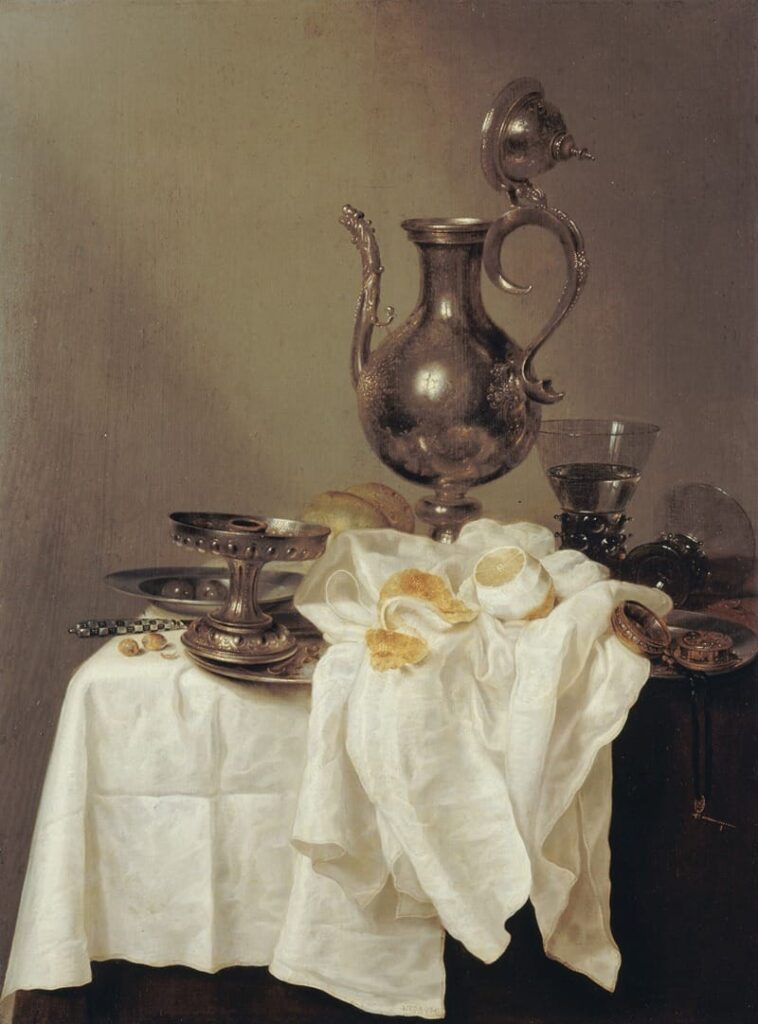
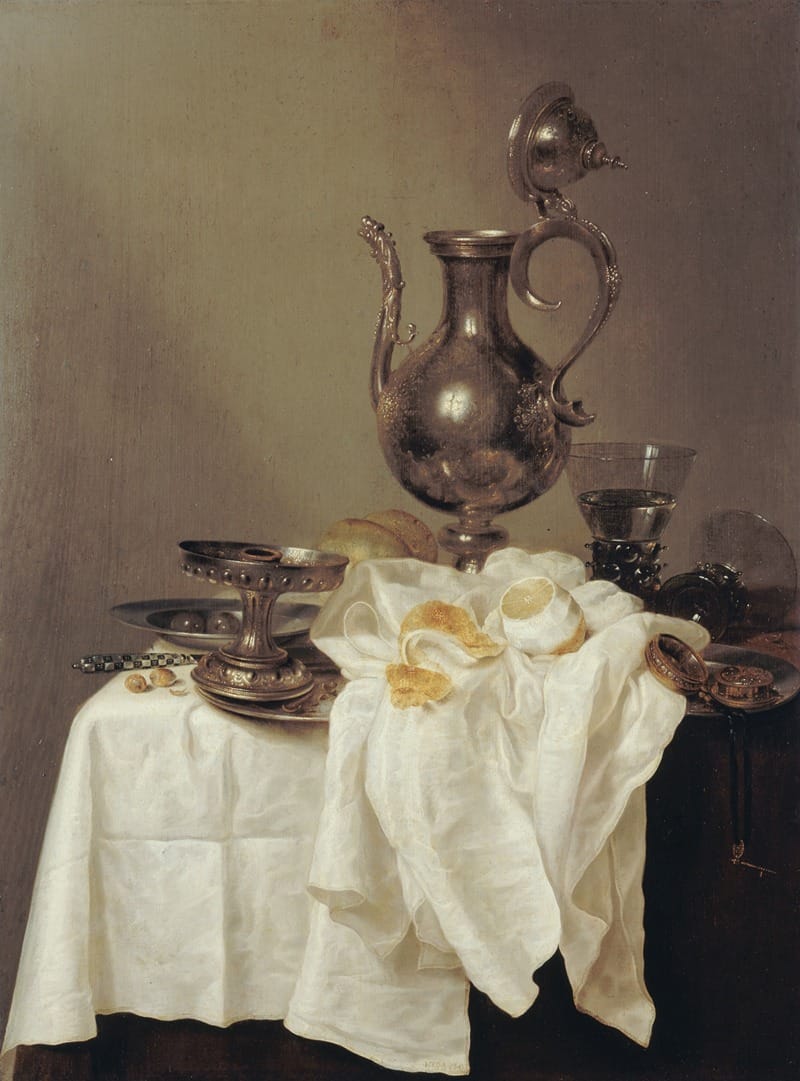
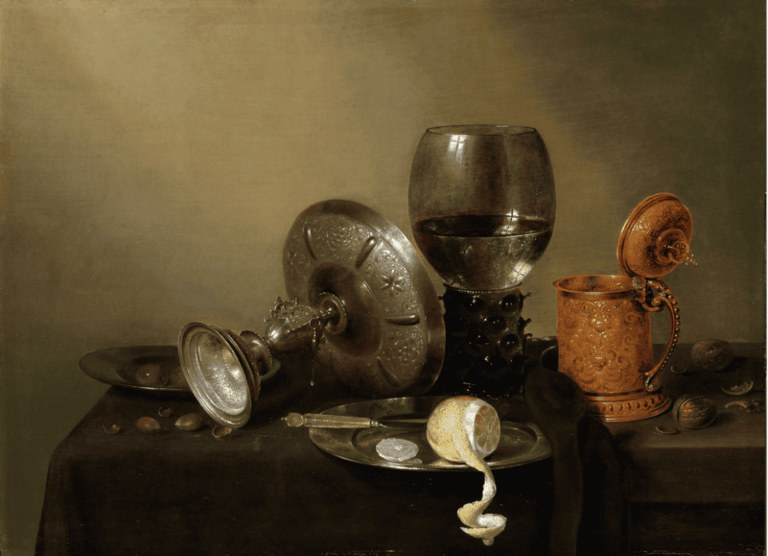
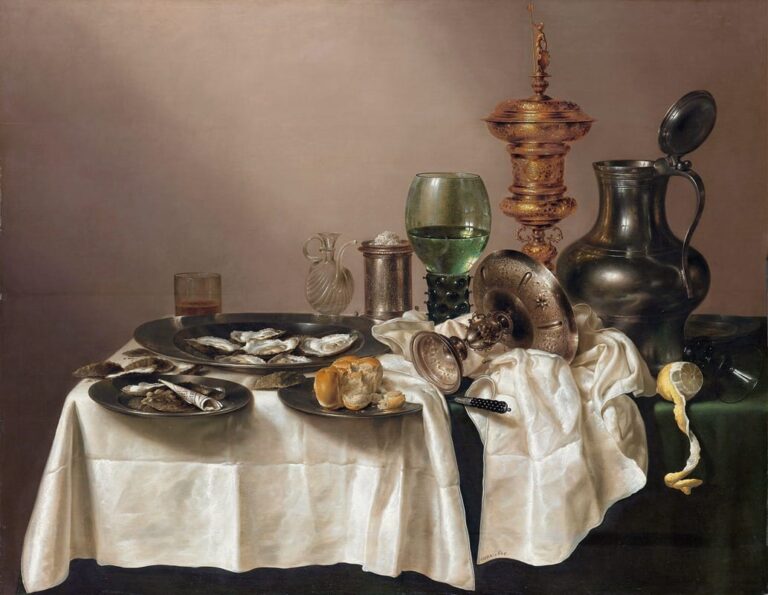
Our Dafen artist studio focuses on capturing the distinct surface qualities of each object. Painters differentiate the reflective sheen of the ewer, the transparent refraction of glass, and the muted matte finish of pewter. Smooth tonal gradations are respected throughout. Highlights are placed delicately and shadows remain soft, without sharp contrasts that would break the painting’s calm, unified atmosphere.
Interior Styling Suggestions
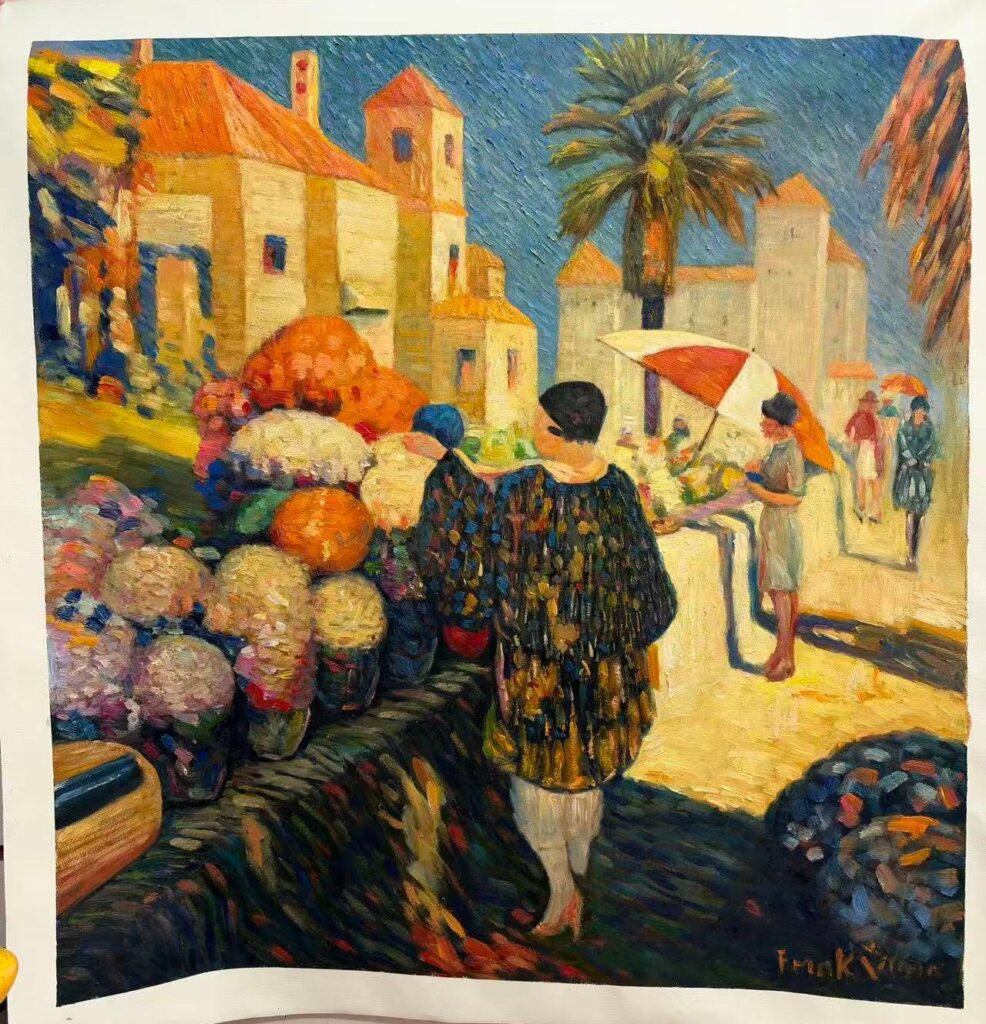
This elegant still life pairs well in traditional dining rooms, library nooks, transitional entry spaces and refined sideboard displays. Warm taupe, soft stone grey and deep sage wall colours complement its subdued earth palette. It can be displayed alone as a quiet statement piece or grouped alongside other Heda still lifes to compare his varied selection of glass, metal and ceramic tableware.
Heda’s Mid-Career Tonal Realism
By 1643, Willem Claesz Heda had firmly established his approach to tonal still life. He prioritises careful observation of light on vessels rather than bright, flamboyant colour, separating his work from the more ornate banquet still lifes created by other Dutch Golden Age painters.
Key Details
- Artwork: Nature morte à l’aiguière (Still Life with Ewer), 1643
- Artist: Willem Claesz Heda (Dutch, 1594–1680)
- Type: hand-painted oil reproduction, not original artwork
- Style: Dutch Golden Age still life, tonal realism
- Original medium: oil on panel



Reviews
There are no reviews yet.