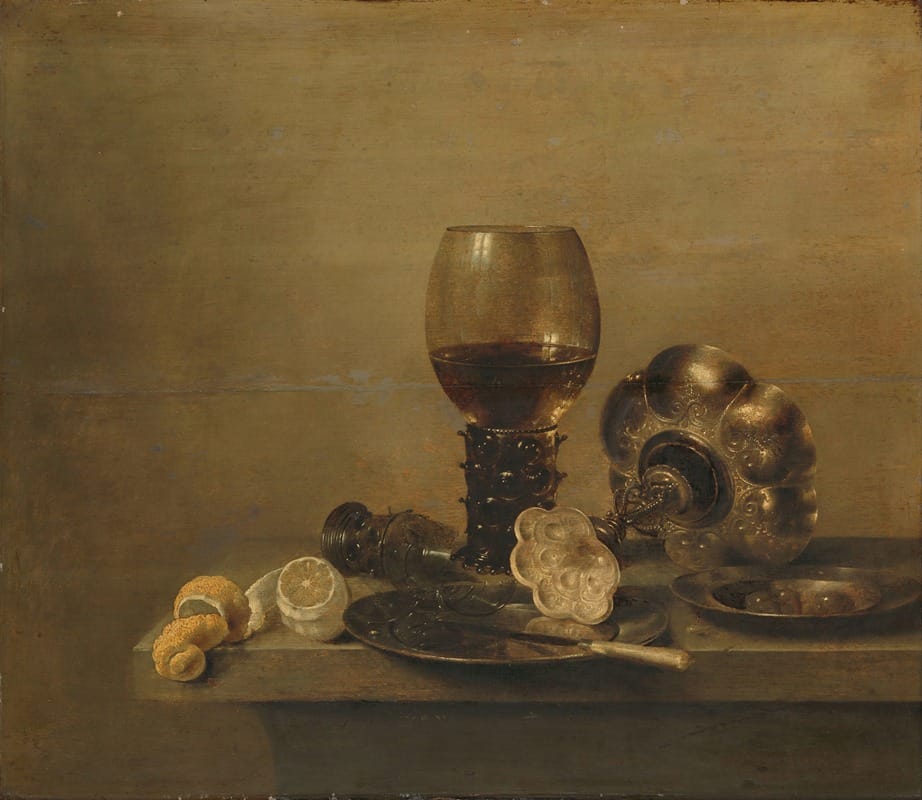
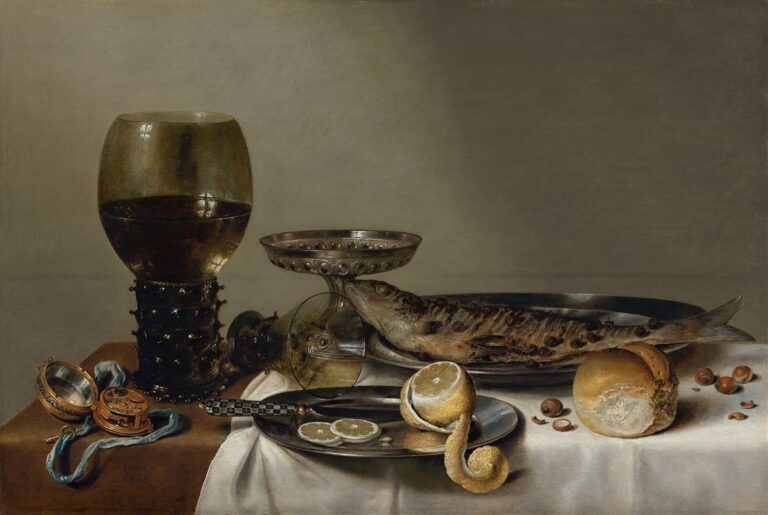
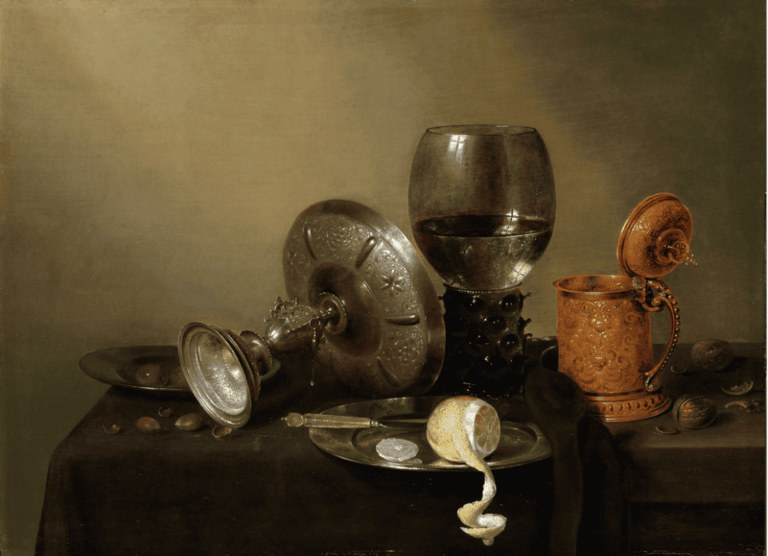
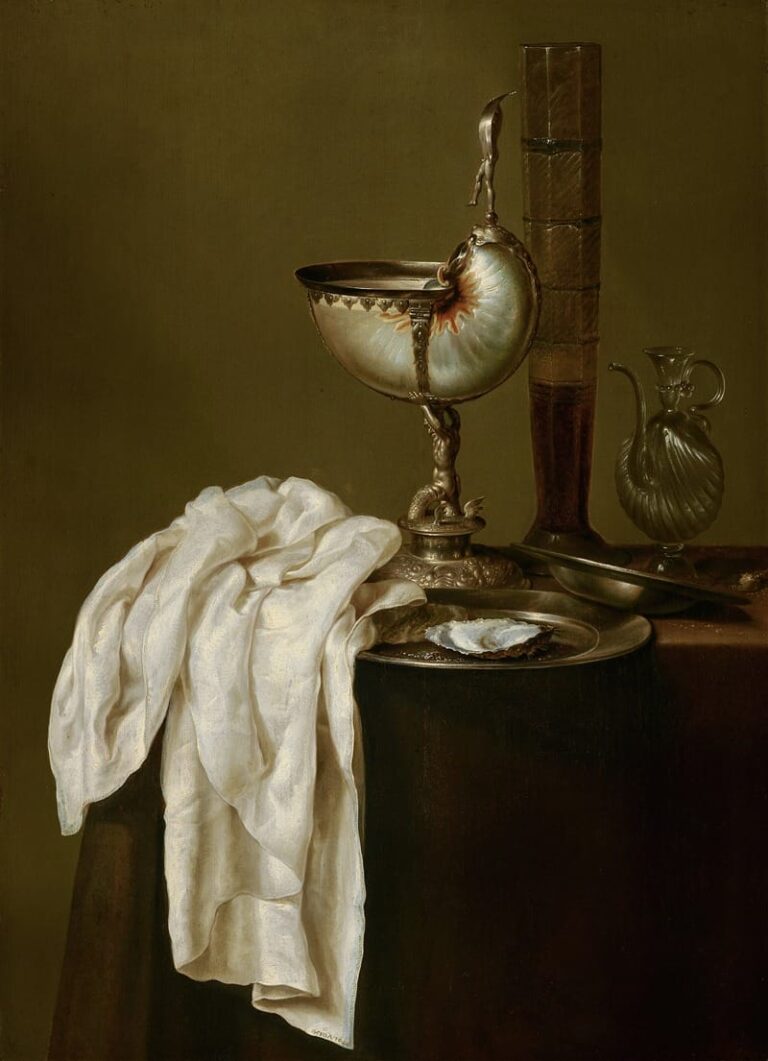
Our Dafen artist studio focuses on the subtle material contrasts that define this piece. Painters render the deep translucency of the wine roemer, the sharp fractured edges of broken glass, fluid silver reflections, matte pewter, glossy olives and the layered rind of the lemon. Smooth tonal gradations are preserved. Highlights are restrained, keeping the mood quiet and introspective, rather than theatrical.
Interior Styling Guidance
This subdued, thought-provoking still life suits traditional libraries, study rooms, wine cellars and moody transitional dining spaces. Warm stone grey, muted taupe and deep olive wall tones complement its earthy, restrained palette. It works beautifully as a standalone conversation piece, or grouped alongside Heda’s other vanitas still lifes featuring broken glass and oysters.
Heda’s Mature Vanitas Tonal Realism
Painted in 1642, this Rijksmuseum piece represents Heda’s refined mid-period style. Instead of abundant feasts, he uses sparse, carefully selected objects to carry quiet moral meaning. His signature restrained tonal approach directs attention to how light interacts with fragile glass and precious metal.
Key Details
- Artwork: Still Life with a Broken Glass, 1642
- Artist: Willem Claesz Heda (Dutch, 1594–1680)
- Type: hand-painted oil reproduction, not original artwork
- Style: Dutch Golden Age still life, tonal realism, vanitas
- Original medium: oil on panel



Reviews
There are no reviews yet.