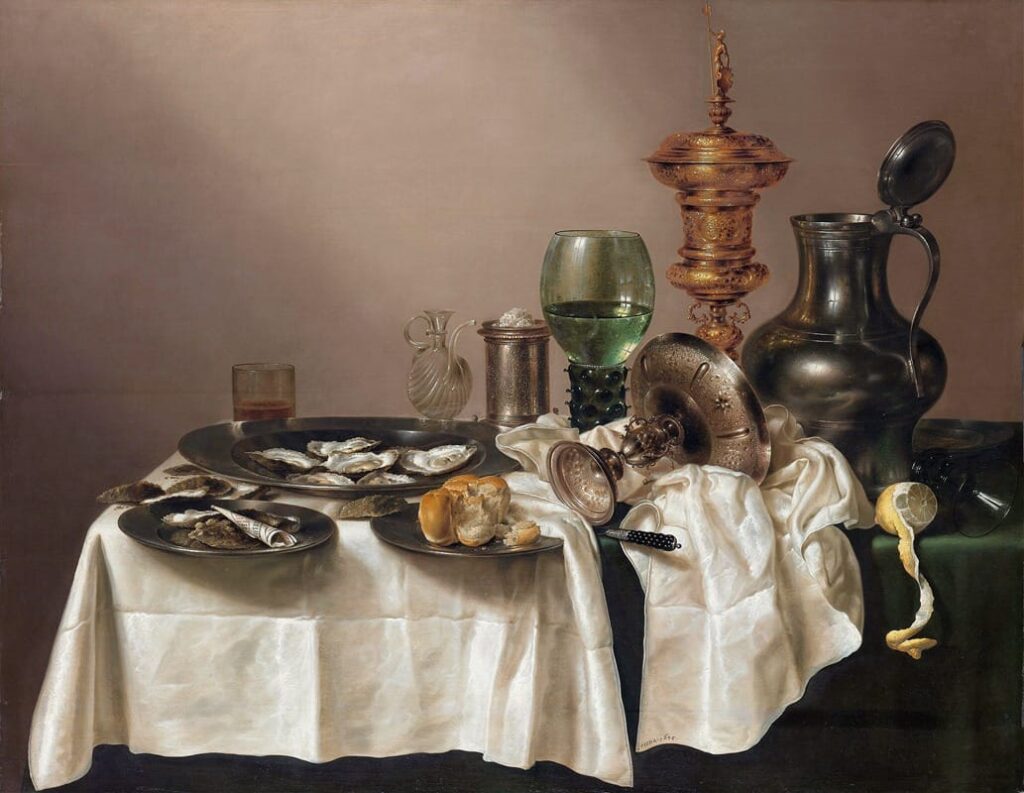
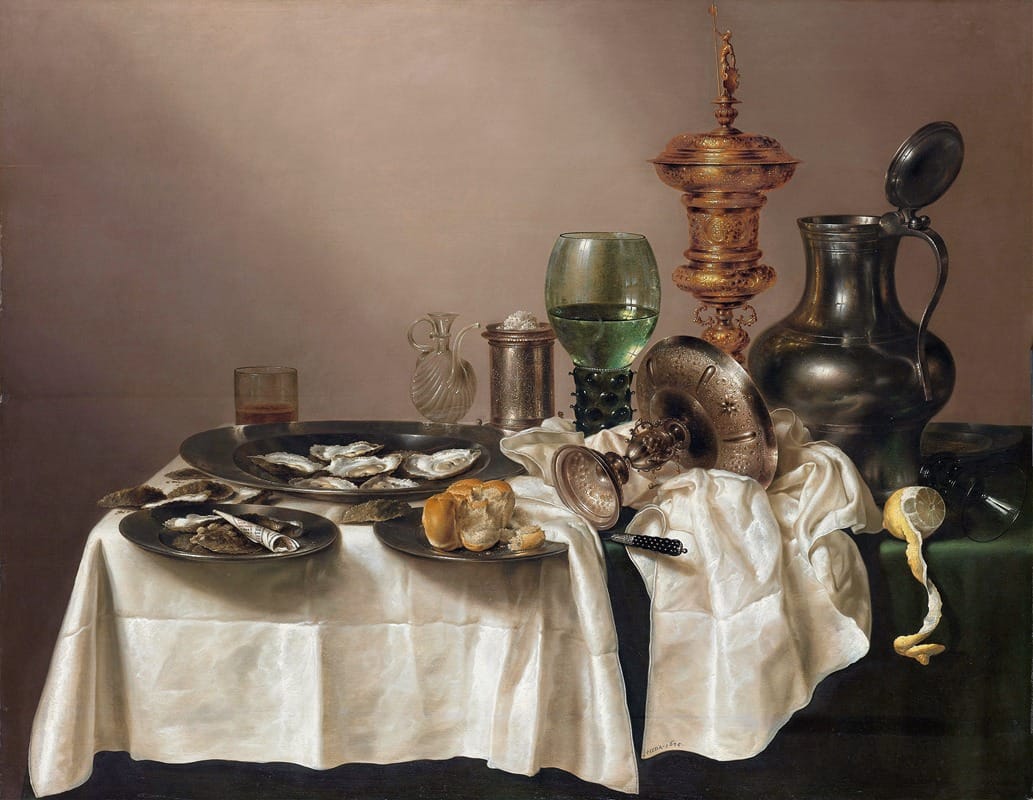
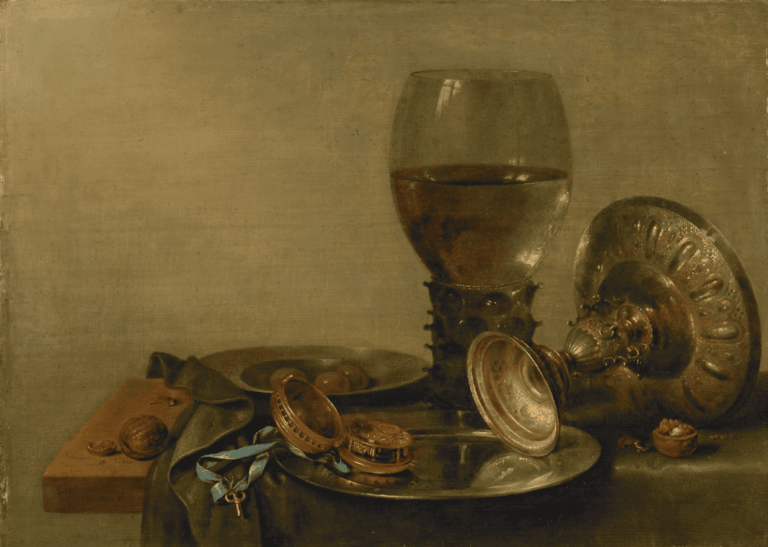
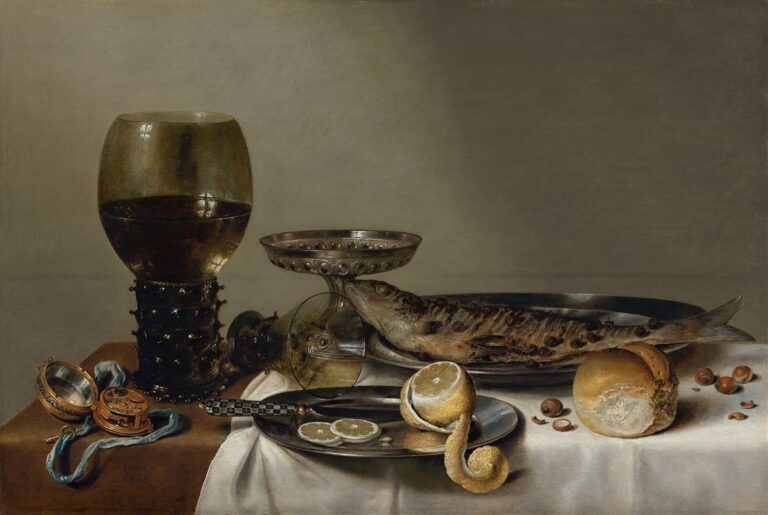
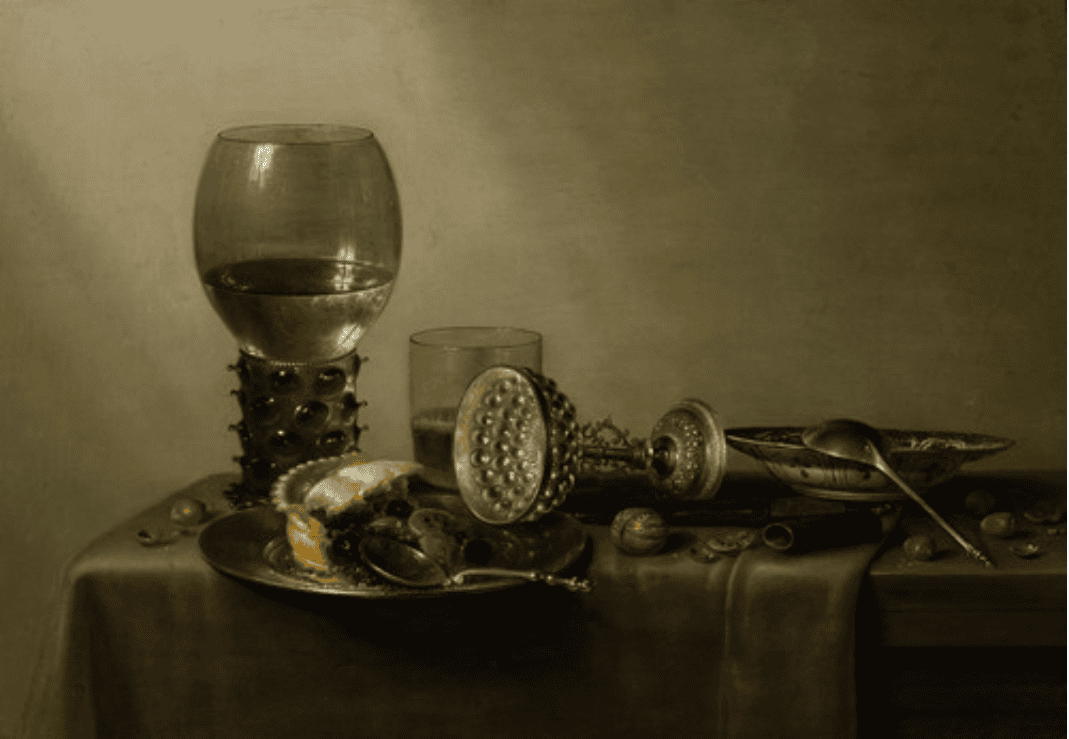
Our Dafen artist studio focuses on Heda’s masterful control of grey tones and subtle lustre. Painters capture the warm glow of gilded silver, the cool reflective sheen of pewter, glass transparency, the delicate woven texture of damask linen and the moist iridescence of oyster shells. Smooth tonal gradations are preserved throughout. Highlights are restrained and shadows soft, avoiding harsh contrast to retain the calm, sophisticated atmosphere of the original Haarlem tonal style.
Interior Styling Guidance
This elegant, museum-famous banquet piece suits formal dining rooms, classic libraries, wine cellars and refined transitional interiors. Warm taupe, deep olive and muted charcoal wall tones complement the green cloth and golden accents of the gilt cup. It works wonderfully as a premium statement artwork, or grouped alongside Heda’s oyster and nautilus cup still lifes to compare his rendering of precious metal vessels.
Heda’s Tonal Banquet Masterpiece
Painted in 1635, this work is held at the Rijksmuseum. It exemplifies Heda’s signature near-monochrome tonal banquet style. Instead of bright, saturated colour, he builds beauty from nuanced shifts of light across diverse materials: silver, gilt, pewter, glass and linen, distinguishing him from more flamboyant pronk still-life painters.
Key Details
- Artwork: Still Life with a Gilt Cup, 1635
- Artist: Willem Claesz Heda (Dutch, 1594–1680)
- Type: hand-painted oil reproduction, not original artwork
- Style: Dutch Golden Age still life, tonal realism, banketje
- Original medium: oil on panel



Reviews
There are no reviews yet.