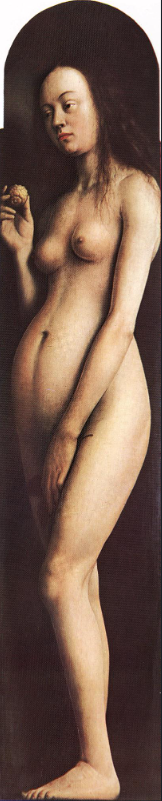
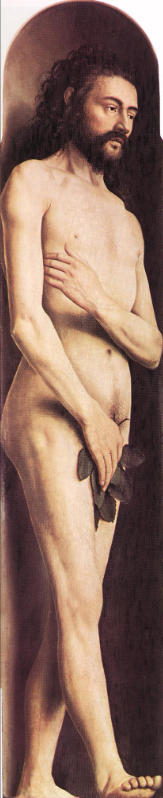
Jan van Eyck’s depiction of Eve, painted on the interior right wing of the monumental Ghent Altarpiece between 1425 and 1429, forms the symmetrical counterpart to Adam and stands as a masterwork of Northern European humanism. Posed gracefully within an architectural niche while holding the forbidden fruit, Eve is rendered with unprecedented observational fidelity. Van Eyck masterfully captures the soft curve of the female form, the subtle play of shadow and light across flesh tones, and the rich narrative symbolism of the accompanying citrus fruit, creating a profound three-dimensional presence.
Studio Craftsmanship and Color Relationships
Translating this iconic polyptych panel onto canvas requires expert handling of subtle tonal gradations and delicate contouring. Studio painters carefully balance the warm, luminous flesh tones against the deep, dark recess of the architectural setting. Every highlight, shadow, and textural detail is applied with fine brushwork to preserve the monumental gravity, anatomical precision, and timeless elegance characteristic of Early Netherlandish painting.
Styling Your Interior Space
The striking vertical composition and classical form of the Eve panel pair exceptionally well with sophisticated, minimalist, or transitional interior settings. The warm neutral flesh tones and dark background harmonize smoothly with natural stone accents, dark wood furniture, or neutral gray and charcoal wall colors, introducing an intellectual and timeless artistic anchor to the room.
Key Details
-
Artwork Title: Eve (from The Ghent Altarpiece)
-
Original Artist: Jan van Eyck (1425–1429)
-
Art Movement: Northern Renaissance
-
Production Method: 100% Hand-Painted Oil Reproduction
-
Base Material: Canvas




Reviews
There are no reviews yet.