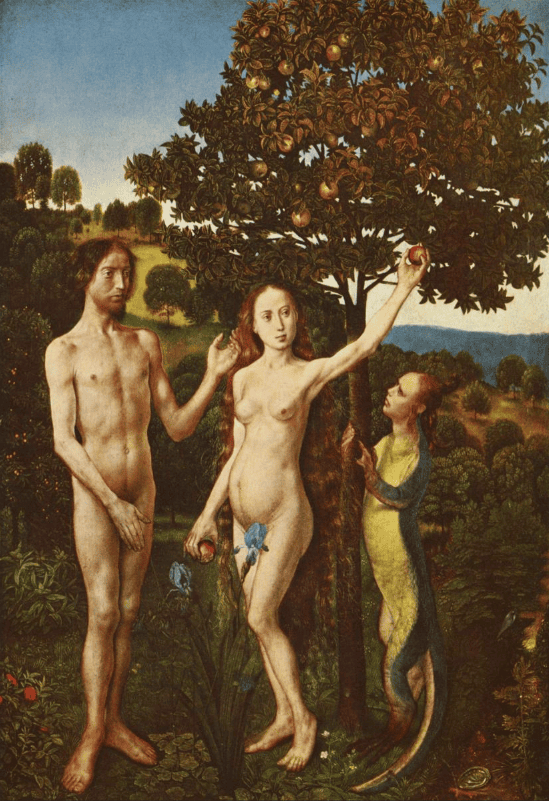
Set within a vibrant, sunlit paradise filled with carefully observed plants and fruit. The serpent coils around the tree, while Eve holds the forbidden fruit and offers it to Adam. The palette is fresh and luminous, with varied greens of foliage, soft warm flesh tones and subtle highlights across fruit and leaves. Fine brushwork records the texture of skin, fruit skin and layered vegetation, the signature naturalism of Northern Renaissance art.
Hand-Painted Interpretation Details
Our hand-painted oil reproduction faithfully preserves the bright Eden atmosphere, intricate plant details and gentle figure rendering of the original panel. Our artisans match the delicate lighting and rich natural colour palette of van der Goes’ original work. This is a hand-painted interpretation, not the original artwork, officially licensed work or museum-certified piece.
Styling & Placement Suggestions
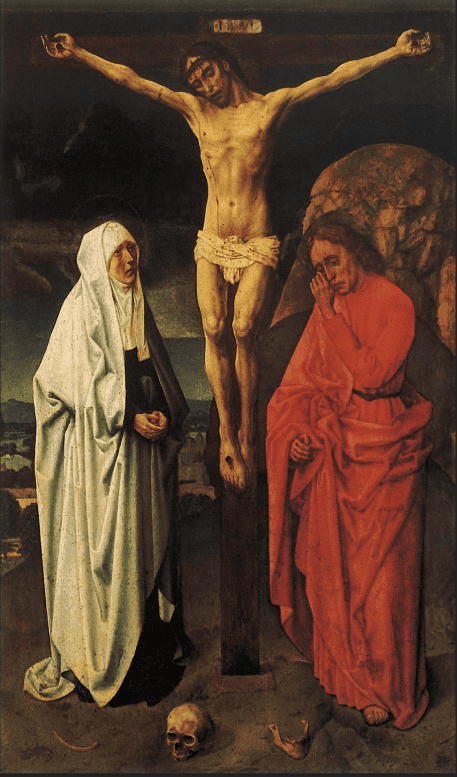
This compact devotional panel suits prayer nooks, studies, library display walls and curated early Netherlandish art collections. It pairs beautifully with slim dark wood or simple gilded frames, classic antique decor and wall colours of warm taupe, soft sage and off-white. It can be displayed together with its companion Lamentation panel to complete the diptych.
Artistic Context
Painted around 1480, The Fall of Man is an oil-on-panel religious painting by Hugo van der Goes, preserved at Kunsthistorisches Museum in Vienna. As one half of the Vienna Diptych, it establishes the narrative of human sin, which is resolved by Christ’s sacrifice shown on the opposite wing. This small devotional work was created for private worship, showcasing van der Goes’ masterful ability to merge symbolic storytelling and lifelike nature observation.
Key Details
- Artist: Hugo van der Goes
- Artwork: The Fall of Man
- Date: c.1480
- Style: Northern Renaissance
- Genre: religious painting
- Media: oil, panel
- Location: Kunsthistorisches Museum, Vienna, Austria
- Dimensions: 32.3 x 21.9 cm




Reviews
There are no reviews yet.