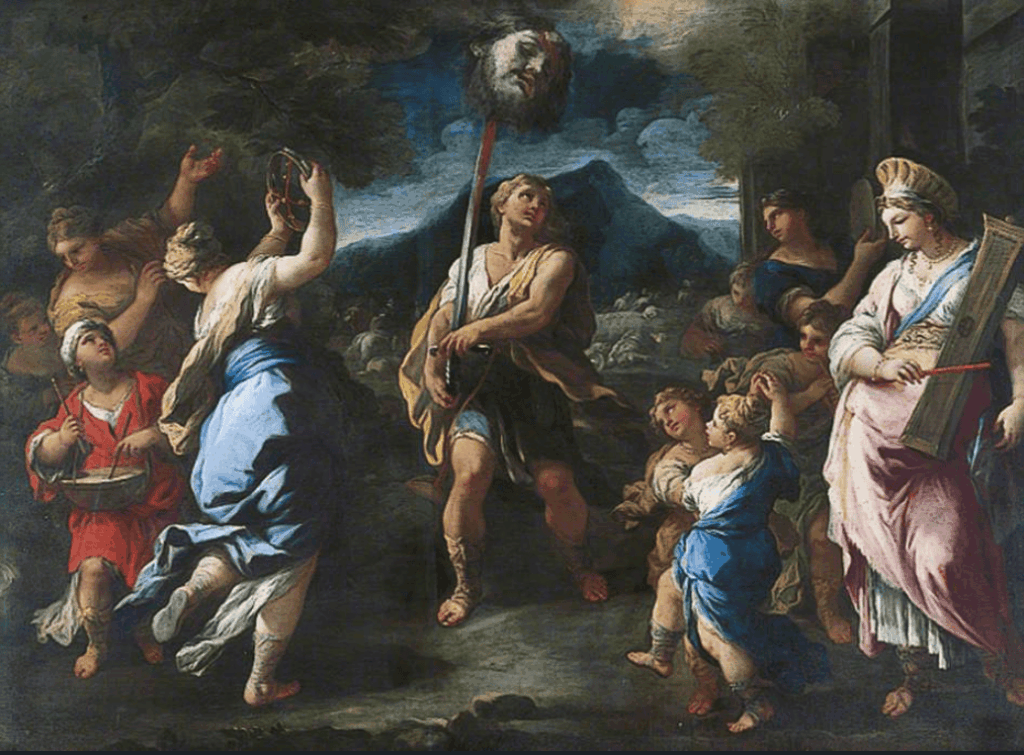
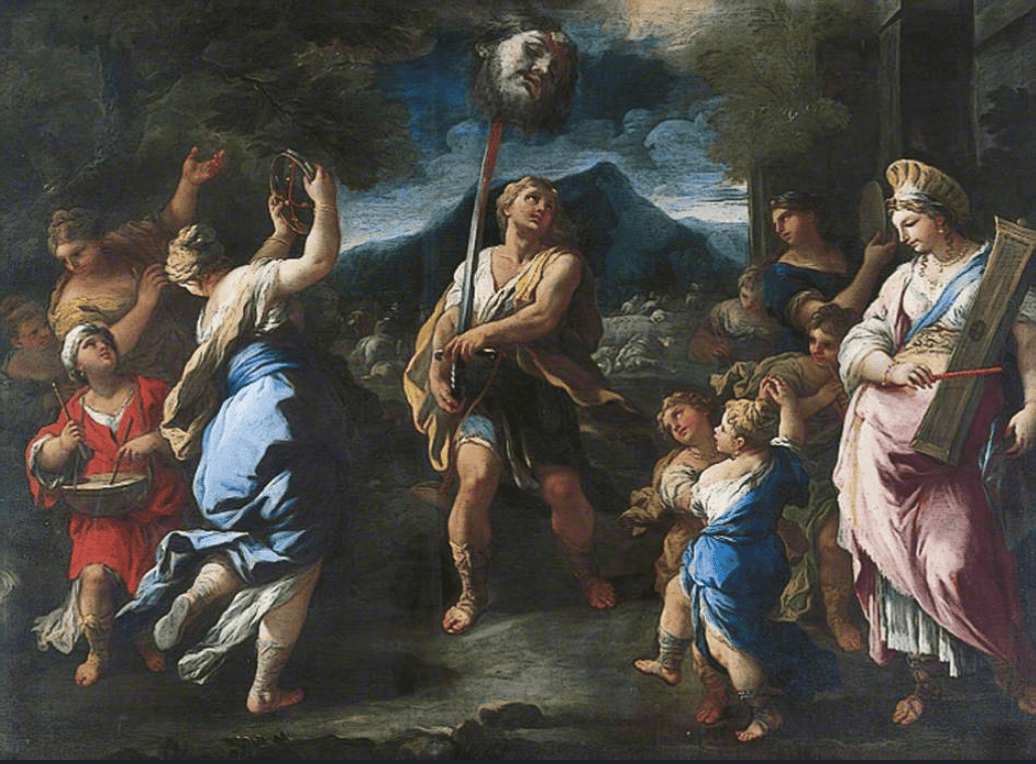


The painting arranges the victorious David as the central focal point, with celebratory figures radiating outward around him. Attendants, musical figures and putti fill the space, creating sweeping, overlapping forms that carry a sense of unrestrained joy. The composition leans into the theatrical dynamism of the Baroque, guiding the eye across billowing drapery and animated gestures rather than holding a static, rigid arrangement.
Tone, Colour and Brushwork
Warm, luminous highlights fall across David and the surrounding celebrants, set against deeper shadow passages that amplify the scene’s drama. Giordano’s brushwork is loose and energetic, capturing the motion of dancing figures, the soft folds of robes and the light, fleeting presence of angels. In reproducing this canvas, attention is paid to keeping edges and tonal transitions expressive, without over-blending to erase the vivid contrast between light and shadow.
Art Context
Completed in 1682, The Triumph of David belongs to Luca Giordano’s Florentine phase. Biblical triumph scenes were a favoured subject for Baroque devotional decoration, blending sacred storytelling with the pageantry admired by wealthy church patrons. Giordano adapted the theme to suit large wall and altar spaces, merging religious meaning with the decorative spectacle of the era.
Display and Styling Suggestions
This animated biblical work suits grand traditional salons, library galleries and classic ecclesiastical-style interiors. An ornate gilded or dark carved wooden frame complements its celebratory, dramatic mood. It may pair beautifully against deep burgundy, muted olive or warm taupe walls as a bold focal artwork.
Key Details
- Artist: Luca Giordano
- Artwork: The Triumph of David
- Date: 1682
- Style: Baroque
- Genre: religious painting
- Period: Florence (1682-1692)
- Product type: hand-painted oil reproduction




Reviews
There are no reviews yet.