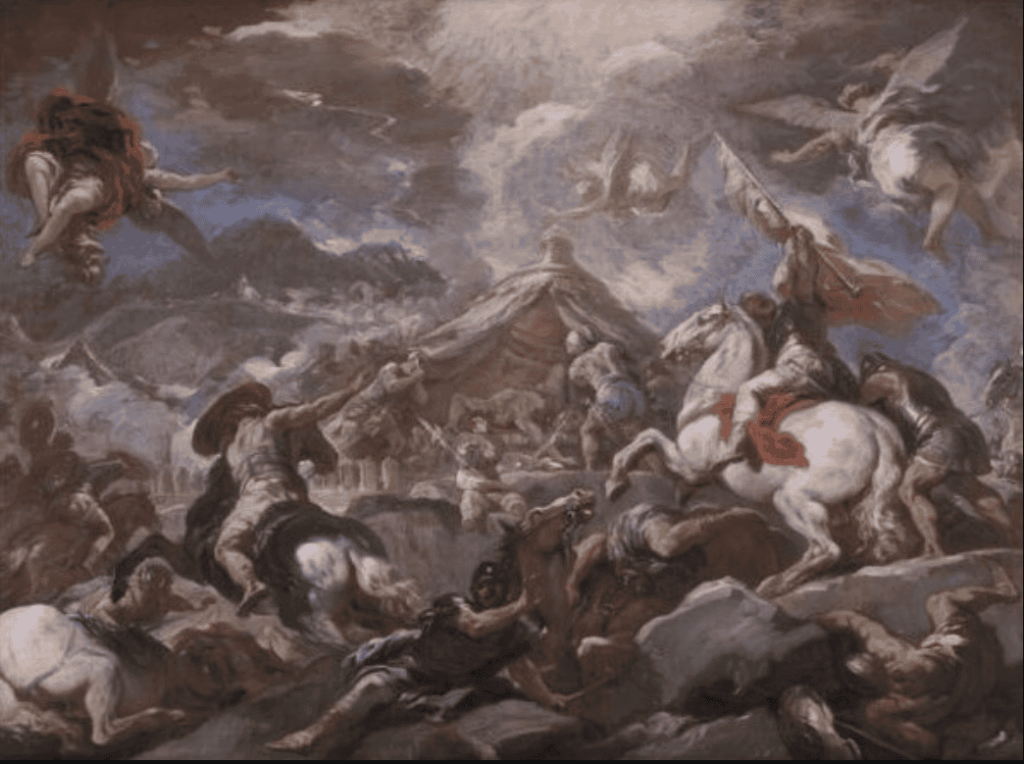
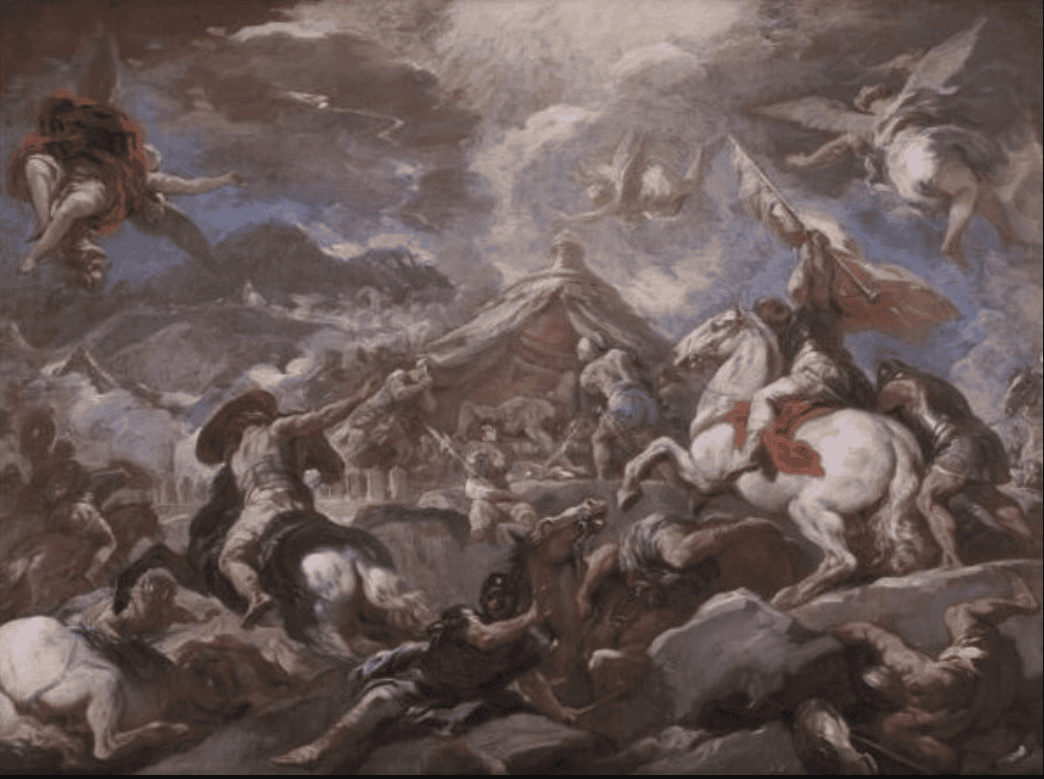

The composition centres on the discovery moment, with attendants crowding around the body of Holofernes. Figures lean forward and recoil in shock, their poses and facial expressions conveying sudden horror and disbelief. Giordano arranges overlapping forms to guide the eye toward the central subject, building tension through clustered human action rather than calm, balanced spacing. This urgent staging is characteristic of Baroque storytelling for biblical audiences.
Tone, Colour and Brushwork
Deep shadows frame the scene, while sharp highlights fall across the figures’ faces and limbs to amplify shock and drama. Giordano’s brushwork is confident and energetic, capturing tense musculature, heavy drapery and startled facial features. When reproducing this work, we retain the expressive transitions between light and shadow, careful not to over-blend edges and lose the sharp, theatrical contrast that defines the painting’s mood.
Art Context
Completed in 1704, this painting belongs to Luca Giordano’s late Neapolitan body of work. It is part of the Judith narrative cycle, paired alongside The Triumph of Judith for Certosa di San Martino in Naples. These Old Testament scenes were designed to deliver powerful emotional impact for viewers within a monastic decorative programme.
Display and Styling Suggestions
This intense narrative canvas suits grand traditional salons, library galleries and formal, restrained interiors. A dark carved wooden frame or modest gilded frame balances the somber, dramatic subject. It can pair well against warm taupe, deep olive or burgundy walls as a striking focal artwork.
Key Details
- Artist: Luca Giordano
- Artwork: The Discovery of the Body of Holofernes
- Date: 1704
- Style: Baroque
- Genre: religious painting
- Period: Late work in Naples (1702-1705)
- Product type: hand-painted oil reproduction




Reviews
There are no reviews yet.