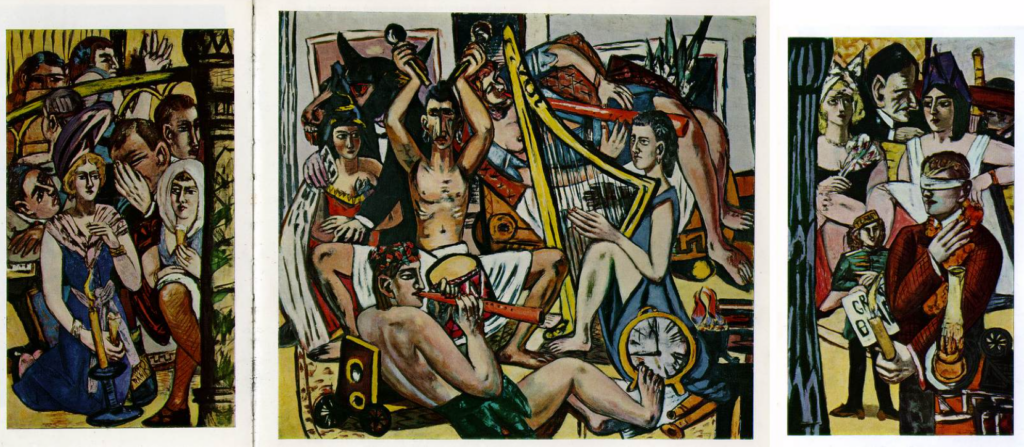
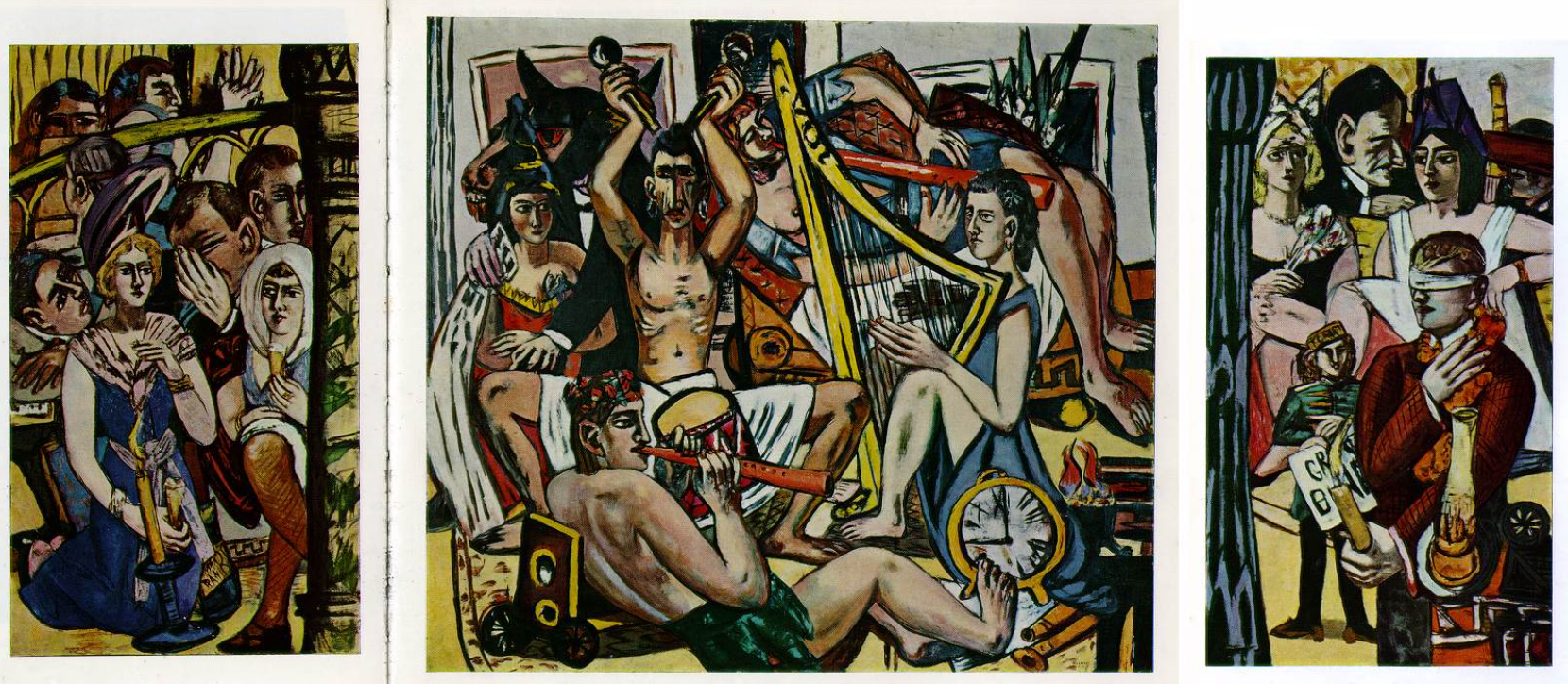
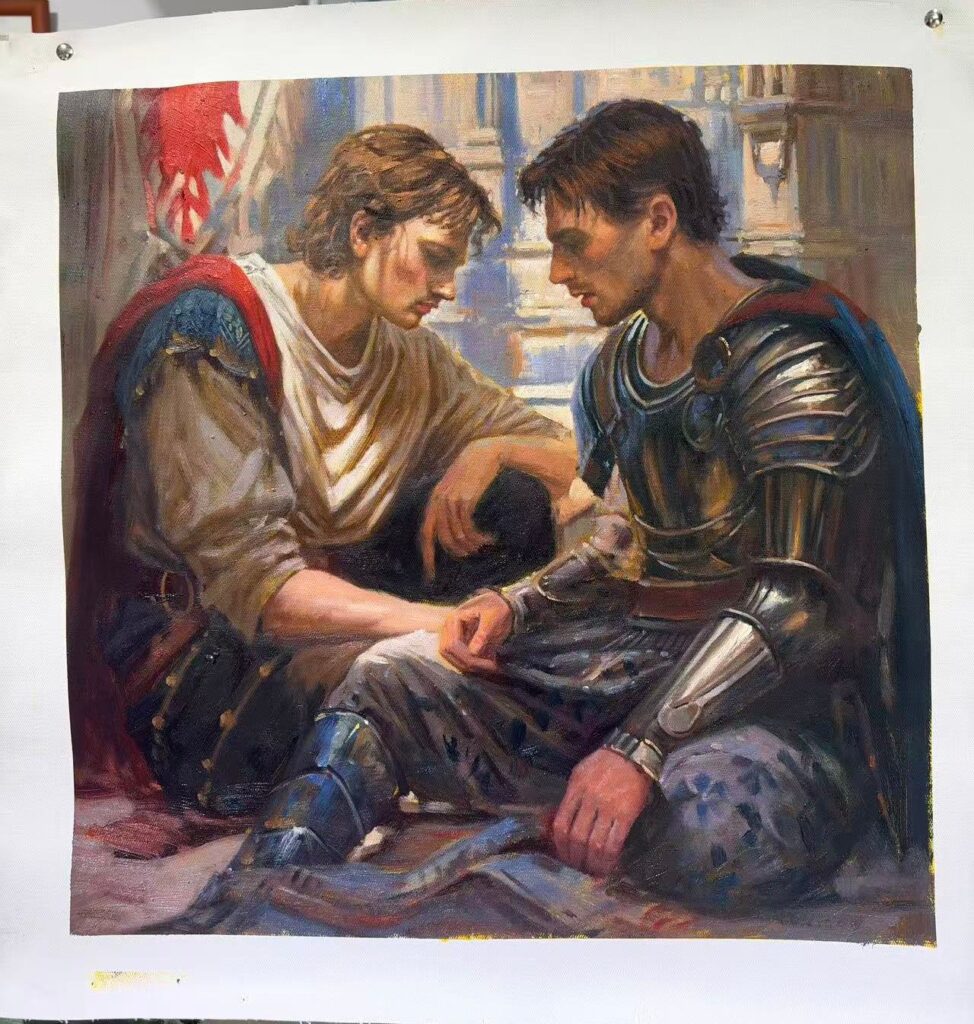
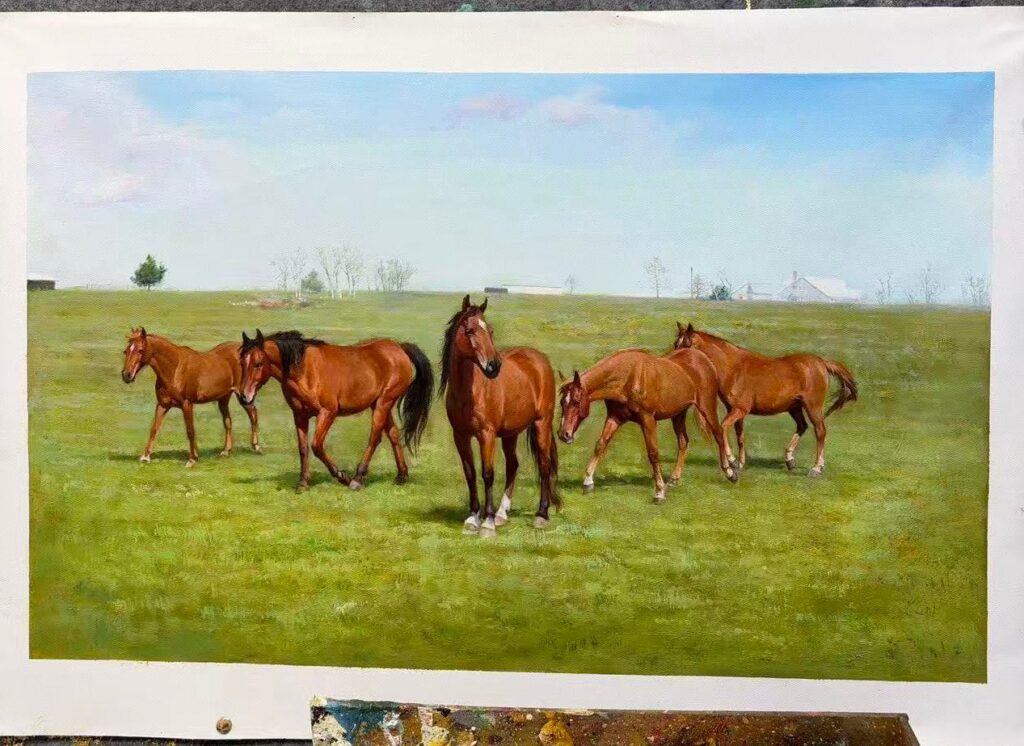

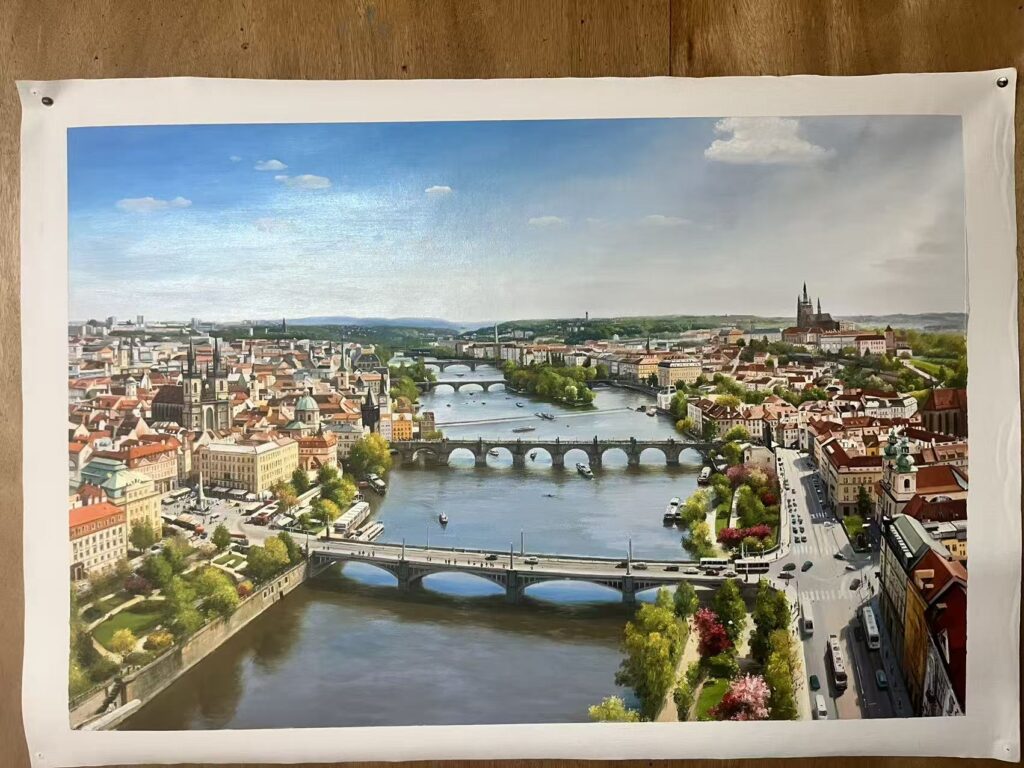
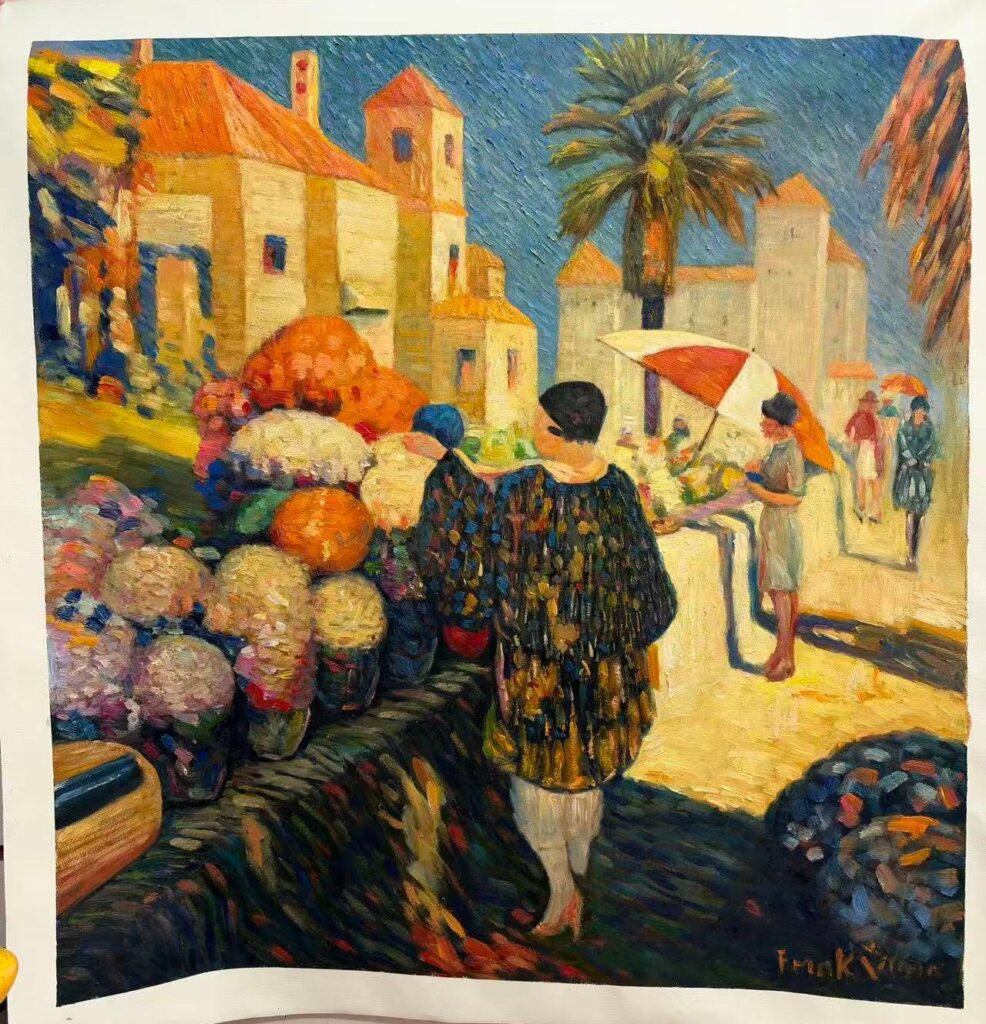
Deep black shadows, rich crimson, forest green, saturated blue and muted flesh tones build the intense palette. Sharp, theatrical highlights carve across sculpted bodies and props, creating stark contrast between illuminated forms and engulfing shadow. When creating this hand-painted oil reproduction, our artists retain the forceful textured brushwork, firm outlines and brooding, dreamlike gravity of the original monumental canvas.
Art Historical Context
Completed in 1945 in Amsterdam while Beckmann was in exile from Nazi Germany, Blindman’s Buff ranks among his most celebrated triptychs. He worked on it under harsh wartime conditions, often painting by candlelight amid shortages and air raids. Reviving the medieval altarpiece format for modern symbolic painting, this work explores illusion, ignorance and longing — core themes that defined his mature vision after the trauma of the First World War and Nazi persecution as a “degenerate artist”.
Display and Styling Guidance
This epic triptych painting is ideal for large gallery feature walls, spacious library rooms and curated German Expressionism collections. A substantial matte black or dark walnut frame complements its solemn, altar-like presence. It pairs beautifully with charcoal grey, deep burgundy and warm taupe walls and can be grouped alongside other Max Beckmann allegorical triptych and figurative reproductions.
Key Details
- Artist: Max Beckmann
- Artwork: Blindman’s Buff
- Date: 1945
- Style: Expressionism
- Genre: genre / allegorical painting
- Original medium: oil on canvas, triptych
- Location: Minneapolis Institute of Art, Minneapolis, MN, US
- Product type: hand-painted oil reproduction




Reviews
There are no reviews yet.