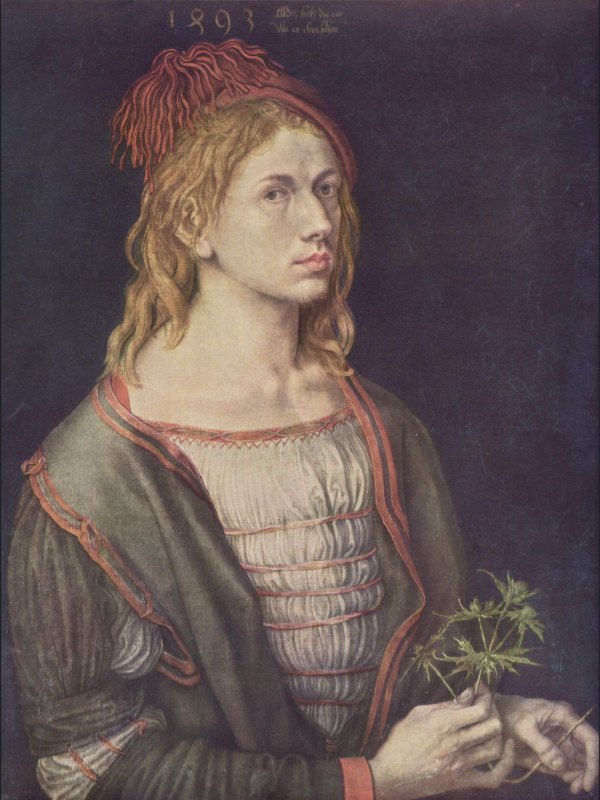
Albrecht Dürer’s 1493 Self-Portrait is one of the earliest painted self-portraits in Western art history, marking a pivotal moment when the artist emerged as an independent creative intellect. Posed in a three-quarter view against a plain, light background, the young Dürer gazes pensively to the side while holding a sprig of eryngium—a traditional symbol of marital fidelity and Christ’s passion. The composition highlights Dürer’s astonishing powers of observation, recording the delicate features of his face, flowing reddish-brown hair, and the linear precision of his costume with remarkable psychological honesty.
Studio Craftsmanship and Color Relationships
Translating this historic masterwork onto canvas requires meticulous control over fine brushwork and subtle tonal gradation. Studio painters carefully balance the warm reddish tones of the artist’s hair and garments against the neutral, luminous backdrop. The delicate interplay of soft directional light across the facial planes and the botanical details of the eryngium are rendered with extreme care, ensuring the final canvas retains the sharp optical clarity and quiet atmosphere of the original parchment-and-canvas panel.
Styling Your Interior Space
The compact vertical proportions and intense psychological presence of Dürer’s Self-Portrait make it an exceptional pairing for traditional home libraries, classic executive studies, or sophisticated transitional spaces. The artwork harmonizes wonderfully with dark wood furnishings, antique brass accents, and neutral or deep-toned wall colors, introducing an intellectual and timeless historical anchor to the room.
Key Details
-
Artwork Title: Self-Portrait
-
Original Artist: Albrecht Dürer (1493)
-
Art Movement: Northern Renaissance
-
Production Method: 100% Hand-Painted Oil Reproduction
-
Base Material: Canvas



Reviews
There are no reviews yet.