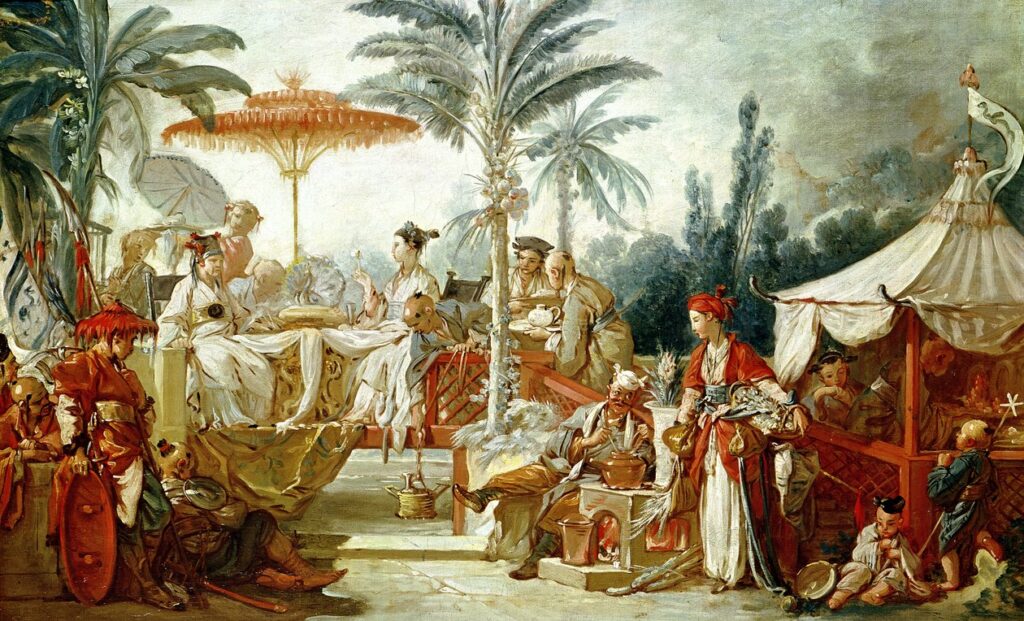
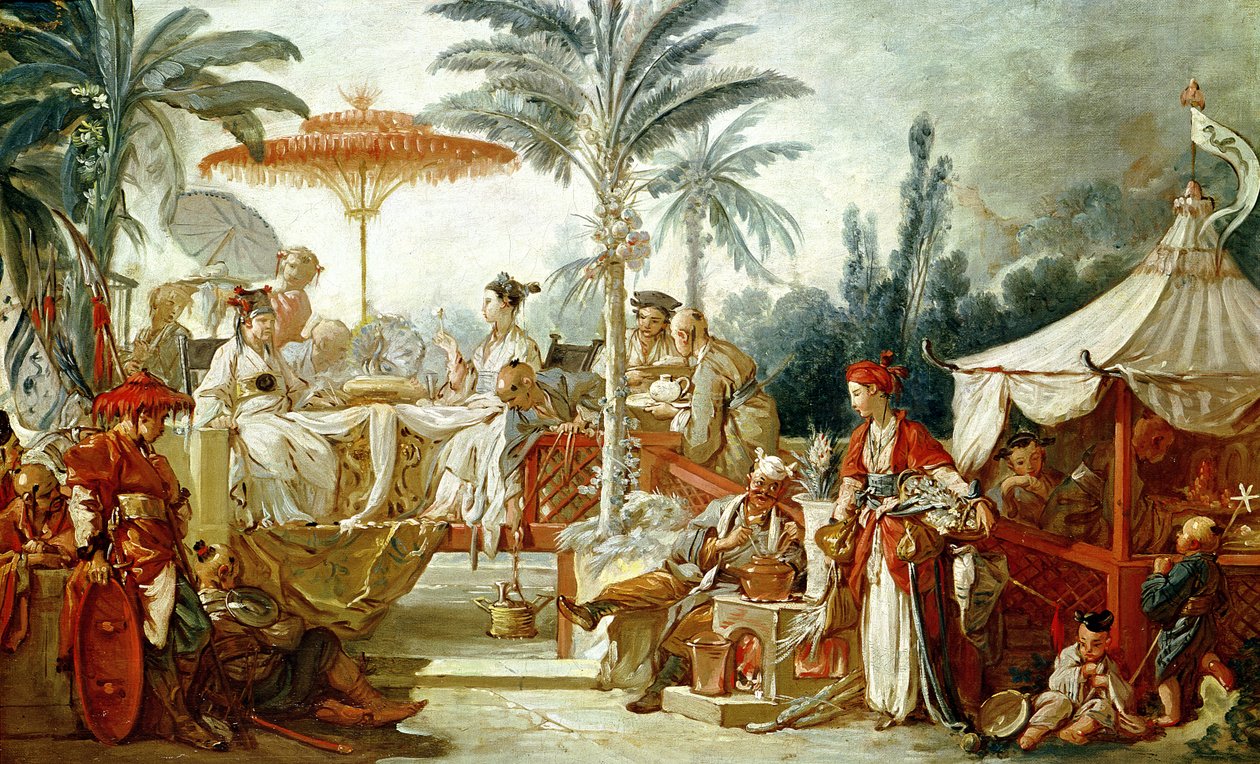
François Boucher’s c.1742 masterwork, Feast of the Chinese Emperor (Le Repas du Empereur Chinois), stands as one of the most elaborate and celebrated compositions in 18th-century French Chinoiserie. Created as an oil study for the famous La Tenture Chinoise tapestry series woven by the Royal Beauvais Manufactory, the painting presents an idealized vision of an imperial Far Eastern banquet. Boucher combines ornate pavilion architecture, exotic peacock feathers, delicate porcelain vessels, and regal figures in patterned silk to create an enchanting fantasy of imperial hospitality that captured the imagination of King Louis XV and the French aristocracy.
Studio Craftsmanship and Ornamental Detail
Translating the complex ceremonial spectacle and delicate pastel tones of Boucher’s tapestry design onto canvas requires exceptional skill in multi-figure balance and refined brushwork. Studio painters meticulously layer luminous rose pinks, soft sky blues, jade greens, and shimmering gold accents to recreate the opulent atmosphere of the imperial court. Fine, precise brushstrokes capture the intricate folds of embroidered robes, decorative ceramic glazes, and ornate wooden trelliswork, ensuring the final canvas retains the breezy optical lightness, decorative harmony, and painterly richness of the original 1742 study.
Styling Your Interior Space
The sweeping horizontal composition, rich narrative detail, and elegant pastel palette of Feast of the Chinese Emperor make it an extraordinary centerpiece for classic formal dining rooms, grand reception salons, or luxury executive suites. The artwork harmonizes exceptionally well with French Louis XV or XVI style furnishings, gilded wood mirrors, fine porcelain collections, and soft neutral, ivory, or pale sage wall palettes, instilling an atmosphere of historic grandeur, courtly refinement, and timeless artistic beauty.
Key Details
-
Artwork Title: Feast of the Chinese Emperor (Festmahl des chinesischen Kaisers / Le Repas du Empereur Chinois)
-
Original Artist: François Boucher (c. 1742)
-
Art Movement: Rococo / Chinoiserie
-
Production Method: 100% Hand-Painted Oil Reproduction
-
Base Material: Canvas




Reviews
There are no reviews yet.