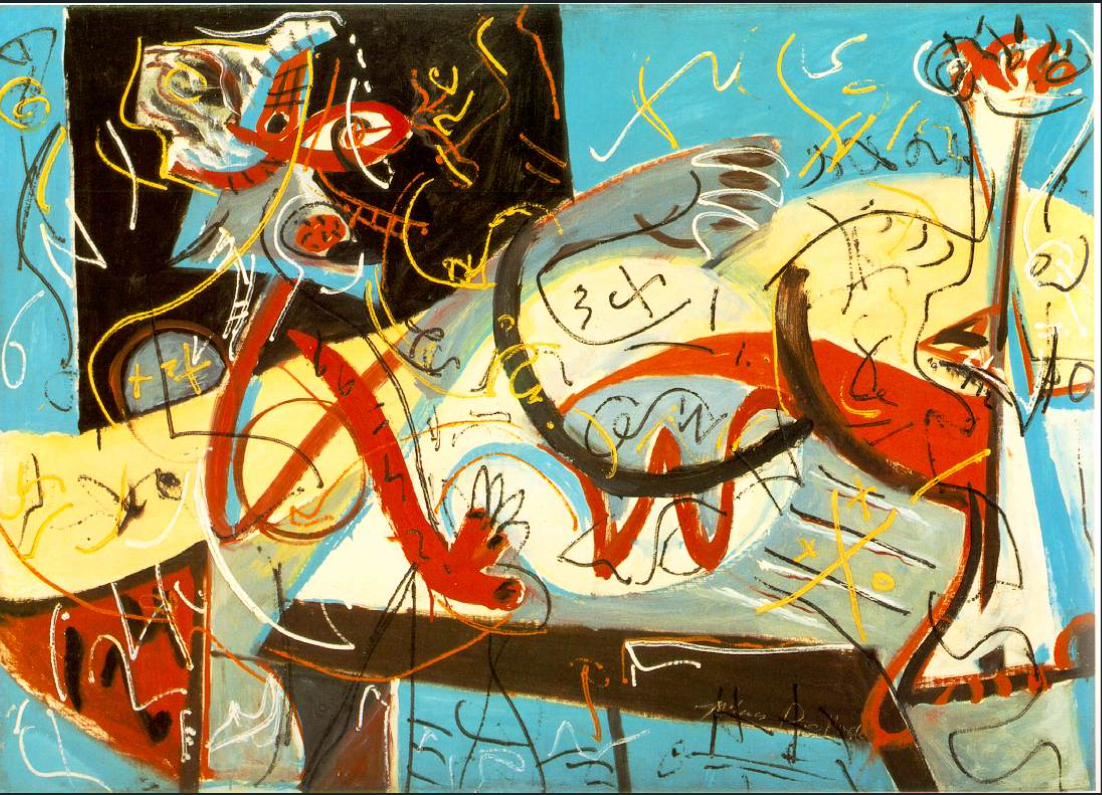
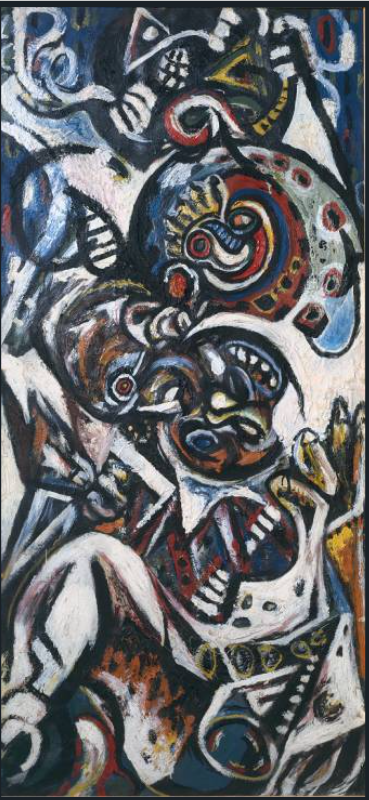
Painted in 1942, Jackson Pollock’s Stenographic Figure represents a watershed moment in the artist’s early career. Created around the time of his first solo exhibition, the canvas reflects his exploration of surrealist automatism, primitive symbolism, and psychoanalytic theory. The composition features a complex network of floating biomorphic forms, numbering signs, and linear “shorthand” strokes scattered across a lighter, sandy ground. This revolutionary approach broke away from traditional figurative constraints, laying the foundational groundwork for the fluid, all-over gesture painting that would soon redefine modern art.
Studio Craftsmanship and Hand-Painted Canvas Reproduction
Our professional studio artists meticulously recreate the physical depth, delicate textural variations, and intricate color interactions that define Pollock’s transitional period. Unlike a flat commercial print, this hand-painted oil reproduction builds authentic impasto relief and subtle chromatic layering on genuine canvas. Painters carefully replicate the playful red and blue patches, energetic black contours, and playful script-like marks to honor the raw spontaneity and organic rhythm of the original museum-grade composition.
Interior Styling and Recommended Wall Placement
With its balanced horizontal proportions ($40 \times 56\text{ cm}$ original dimensions) and engaging abstract composition, Stenographic Figure serves as an intellectual and sophisticated focal point in contemporary interiors. The artwork pairs exceptionally well with neutral linen walls, natural wood furnishings, mid-century modern décor, or minimalist gallery settings. Whether displayed in an executive study, modern living room, or creative studio space, its mysterious glyphic imagery provides endless visual fascination.
Key Details
-
Artwork Title: Stenographic Figure (1942)
-
Artist Inspiration: Jackson Pollock
-
Execution: 100% hand-painted oil reproduction on canvas
-
Original Museum Reference: Museum of Modern Art (MoMA), New York City, NY, US
-
Art Style: Abstract Expressionism / Abstract




Reviews
There are no reviews yet.