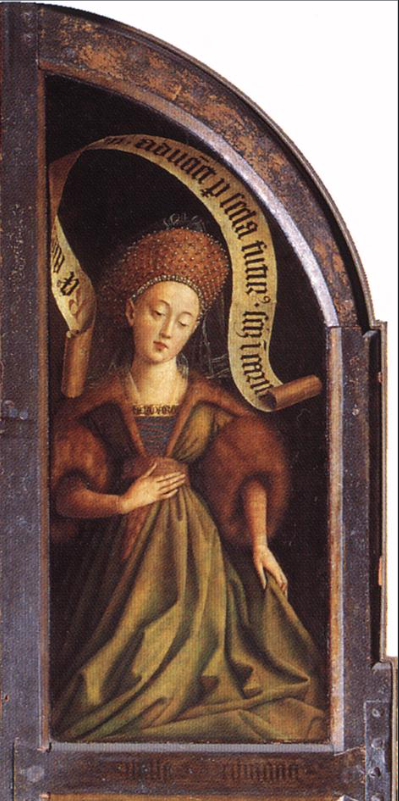
Jan van Eyck’s depiction of The Cumaean Sibyl, forming part of the exterior upper wings of the monumental Ghent Altarpiece completed in 1432, stands as a masterpiece of Early Netherlandish realism. The composition features the ancient prophetess portrayed with dignified solemnity, gazing upward within a simulated stone niche technique. Van Eyck masterfully employs a trompe-l’œil effect where the figure appears as a carved statue, rendered with meticulous attention to heavy folded headwear, luxurious garments, and devotional posture.
Studio Craftsmanship and Color Relationships
Translating this legendary altarpiece panel onto canvas requires expert control over neutral stone tones, deep fabric textures, and subtle directional lighting. Studio painters carefully balance the cool, austere grays of the architectural framing against the rich dark textiles and warm skin tones of the prophetic figure. The subtle interplay of shadow across the carved-stone effect and the realistic facial features are rendered with fine brushwork, preserving the profound visual weight and solemn atmosphere of the original masterwork.
Styling Your Interior Space
The vertical proportions, dignified presence, and restrained palette of The Cumaean Sibyl panel make it an exceptional pairing for traditional home libraries, classic executive studies, or sophisticated transitional spaces. The artwork harmonizes wonderfully with dark wood furnishings, antique bronze hardware, and neutral or deep-toned wall colors, introducing an intellectual and timeless historical centerpiece to the room.
Key Details
-
Artwork Title: The Cumaean Sibyl (from The Ghent Altarpiece)
-
Original Artist: Jan van Eyck (1432)
-
Art Movement: Northern Renaissance
-
Production Method: 100% Hand-Painted Oil Reproduction
-
Base Material: Canvas




Reviews
There are no reviews yet.