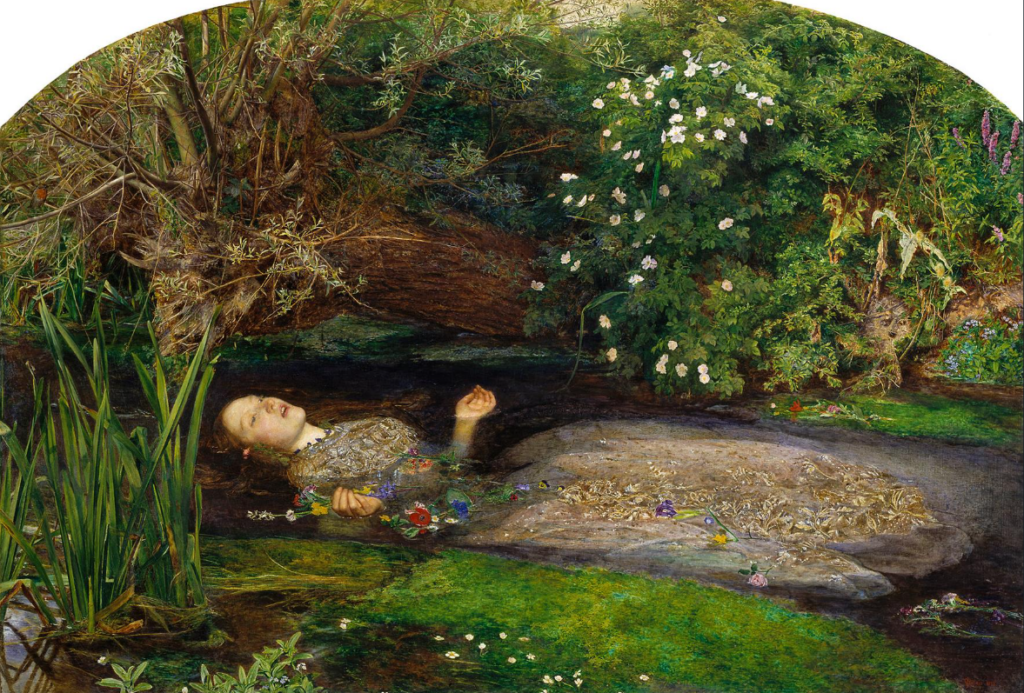
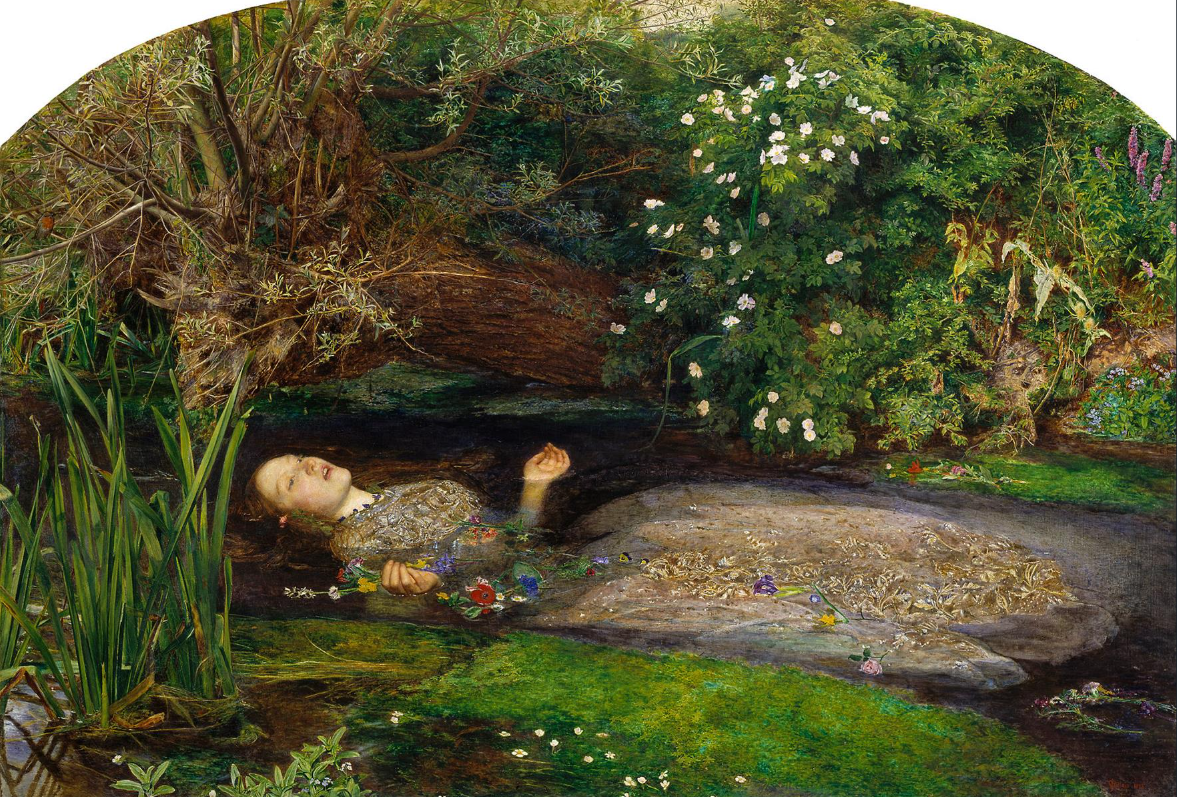
Painted between 1851 and 1852, Sir John Everett Millais’s Ophelia is widely acknowledged as one of the most famous and emotionally resonant icons of British nineteenth-century art. Drawing directly from Act IV, Scene VII of William Shakespeare’s Hamlet, the masterpiece depicts Ophelia’s tragic death as described by Queen Gertrude: having fallen into the stream while gathering garlands of wild flowers, she floats serenely along the water singing snatches of old tunes, blissfully unaware of her impending fate before her heavy, waterlogged garments drag her beneath the surface. Modeled by the celebrated Pre-Raphaelite muse Elizabeth Siddal, Ophelia’s open-palmed posture and haunting, enigmatic expression embody an unforgettable synthesis of romantic melancholy, poetic resignation, and tragic beauty.
Studio Craftsmanship and Hyper-Detailed Botanical Realism
In rigorous loyalty to the founding principles of the Pre-Raphaelite Brotherhood, Millais spent up to eleven hours a day across five months sitting along the banks of the Hogsmill River in Surrey to paint the riverbank landscape en plein air. Recreating this legendary level of hyper-detailed naturalism onto canvas requires extraordinary technical discipline and meticulous glaze work from studio painters. Layer upon layer of emerald green, deep moss, and shimmering aqua tones are built up to capture the murky translucency of the flowing water and trailing weeds. Every flower included in Shakespeare’s text—such as forget-me-nots for remembrance, poppies symbolizing sleep and death, pansies for love in vain, and nettles representing pain—is rendered with botanical fidelity, glowing like vibrant jewel accents against her intricate, antique silver-and-gold embroidered gown.
Styling Your Interior Space
The magnificent horizontal composition, rich jewel-toned green-and-floral palette, and supreme art-historical heritage of Ophelia make it an extraordinary statement piece for private executive offices, architectural libraries, formal sitting saloons, or luxury gallery walls. The artwork pairs exceptionally well with dark walnut, mahogany, or antique gilt furnishings, classic leather armchairs, vintage brass or bronze lighting, and soft neutral, deep forest green, charcoal, or warm burgundy wall palettes, filling your interior with an atmosphere of Pre-Raphaelite romance, literary poetry, and timeless Victorian grandeur.
Key Details
-
Artwork Title: Ophelia (1851–1852)
-
Original Artist: Sir John Everett Millais (1829–1896)
-
Art Movement: Pre-Raphaelite Brotherhood (PRB) / Romanticism
-
Production Method: 100% Hand-Painted Oil Reproduction
-
Base Material: Canvas





Reviews
There are no reviews yet.