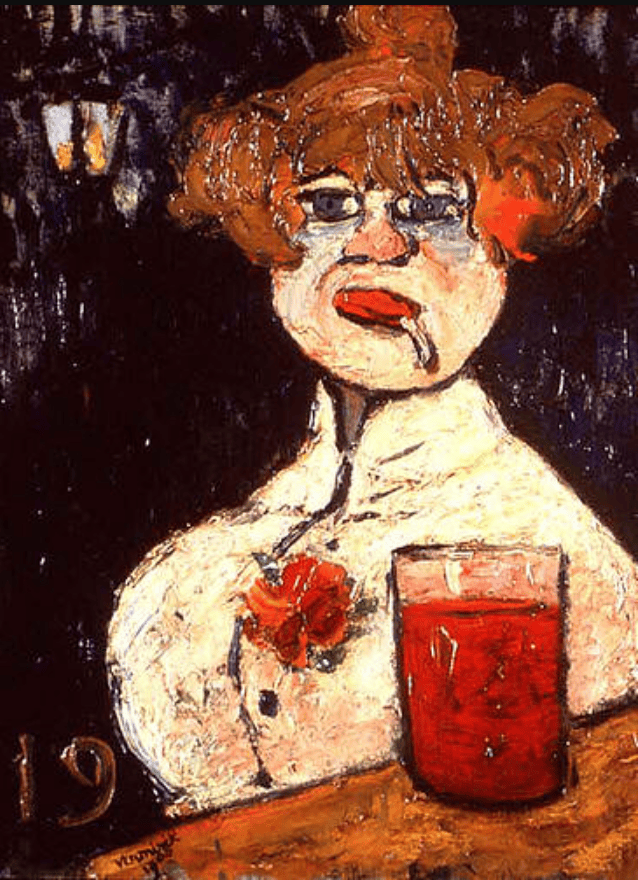
The composition centres on a figure positioned behind a bar counter. Rejecting naturalistic colour rules and soft academic shading, Vlaminck prioritises emotional impact over strict realism. Forms are outlined and simplified; colour is used subjectively to convey atmosphere rather than record exact optical appearance. This early work reveals the direction Fauvism would soon take, breaking from Impressionism’s subtle tones toward audacious, unblended colour statements.
Light, Colour & Reproduction Brushwork
Vibrant, contrasting hues drive the mood of the scene. Strong colour blocks replace gradual tonal transitions. Brushstrokes are loose, energetic and visible, lending the whole canvas a lively, turbulent character. When creating this hand-painted oil reproduction, our artists preserve the confident, gestural brushwork and daring colour harmony that separate Fauvist painting from conventional portraiture.
Art Historical Context
Painted in 1900, The Bar Counter belongs to the formative phase of Fauvism. Alongside Henri Matisse, Vlaminck was one of the core artists of the movement, nicknamed “wild beasts” for their unorthodox use of colour. This canvas shows his early exploration of expressive colour before the landmark 1905 Salon d’Automne exhibition that formally introduced Fauvism to the public.
Display and Styling Guidance
This vivid, characterful painting suits modern living rooms, creative studio spaces, bar lounges and curated Fauvist art collections. A simple thin black or natural oak frame complements its bold aesthetic. It pairs beautifully with neutral white, charcoal grey or warm cream walls and can be grouped with other reproductions by Fauvist masters.
Key Details
- Artist: Maurice de Vlaminck
- Artwork: The Bar Counter
- Date: 1900
- Style: Fauvism
- Genre: portrait
- Original medium: oil on canvas
- Product type: hand-painted oil reproduction



Reviews
There are no reviews yet.