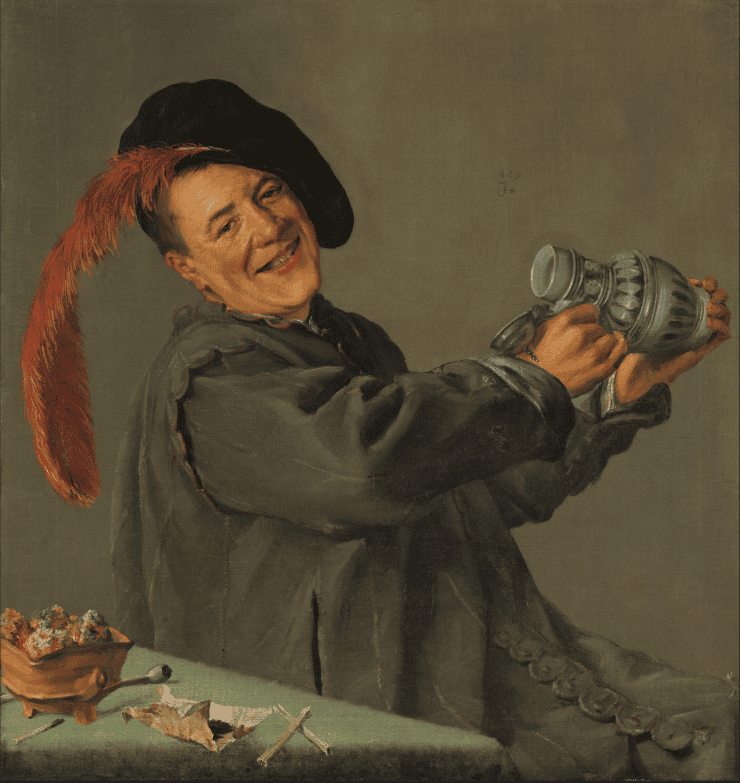
Painted in 1629, this work is a classic example of Dutch Golden Age Baroque tronie, a study of facial expression and character rather than a formal portrait. Judith Leyster depicts a merry drinker with a raised glass, using strong contrast between light and shadow to draw focus to the sitter’s animated face. The loose, energetic brushwork and spontaneous pose convey an unposed, candid moment, capturing warmth and joy.
Light, Colour and Brushwork
Dramatic chiaroscuro defines the composition, a signature technique shared with her contemporary Rembrandt. Bright highlights illuminate the face, glass and hand against a deep dark background. Our hand-painted oil reproduction carefully reproduces this striking light effect, preserving the rich tonal depth and lively texture of Leyster’s brushwork. The colour palette leans into earthy, warm hues that suit the tavern motif.
Reproduction Focus
Judith Leyster was one of the few successful female artists of the Dutch Golden Age, and this tronie stands out for its playful, exuberant mood. Unlike stiff formal portraits, this piece celebrates everyday human pleasure. It offers a wonderful contrast to more sombre Baroque works and brings spirited character to wall decor.
Suggested Display
This Baroque tronie works beautifully in traditional, classic, dark academia and gallery-style interiors. A simple dark wood frame accentuates the dramatic light contrast. Deep neutral wall tones such as charcoal, warm taupe and muted cream help the lit figure remain the focal point.
Key Details
- Artist: Judith Leyster
- Artwork: The Jolly Drinker (De vrolijke drinker)
- Date:1629
- Style: Baroque
- Genre: portrait, tronie
- Media: oil, canvas
- Dimensions: 89 x 85 cm
- Location: Rijksmuseum, Amsterdam, Netherlands
- Product type: hand-painted oil reproduction




Reviews
There are no reviews yet.