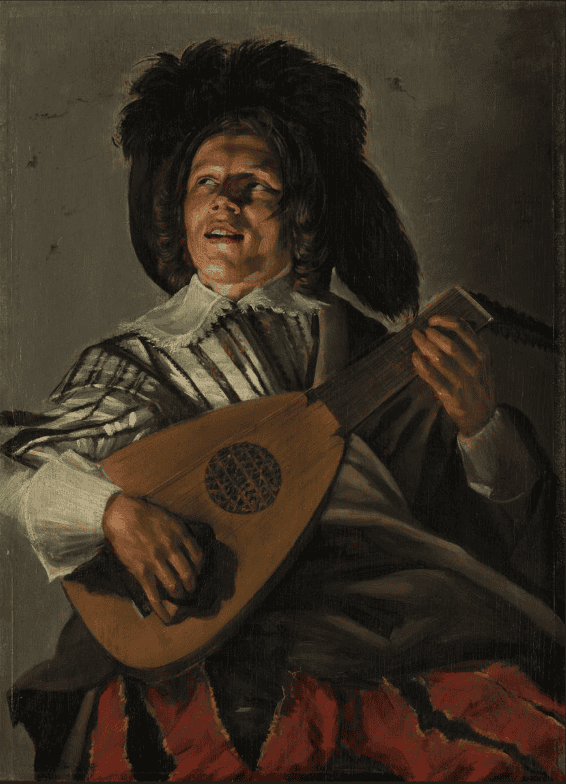

Painted in 1629, The Serenade is one of Judith Leyster’s most celebrated tronies, a character study focused on expressive emotion rather than formal portraiture. A lone musician with a lute tilts his head upward mid-song, as if singing aloud. Leyster borrows the dramatic light technique of the Utrecht Caravaggisti and the loose, spontaneous pose style of Frans Hals, blending them into her own distinct vision. For many years, this work was mistakenly attributed to Frans Hals before Leyster’s signature monogram was rediscovered.
Light, Colour and Brushwork
Strong chiaroscuro forms the core of the painting. Bright light wraps around the musician’s face, ruffled collar and lute, set against a deep, muted dark background. Warm earthy tones dominate the palette. Our hand-painted oil reproduction carefully reproduces the soft highlights and deep shadow transitions, preserving the energetic brushwork and theatrical atmosphere of the original.
Reproduction Focus
This piece stands apart from Leyster’s tavern-themed tronies. Musical subjects carry a lyrical, romantic charm, while the dramatic lighting creates immediate visual impact. As one of her earliest dated works, it demonstrates her exceptional skill in capturing fleeting human expression, cementing her status as a leading female artist of the Dutch Golden Age.
Suggested Display
This Baroque tronie suits classic, traditional, dark academia and gallery-style interiors. A simple dark wood frame amplifies the dramatic contrast of light and shadow. Wall colours such as warm cream, muted taupe and charcoal help keep focus on the musician and his instrument.
Key Details
- Artist: Judith Leyster
- Artwork: The Serenade (De serenade)
- Date:1629
- Style: Baroque
- Genre: portrait, tronie
- Media: oil, canvas
- Dimensions: 45.5 x 35 cm
- Location: Rijksmuseum, Amsterdam, Netherlands
- Product type: hand-painted oil reproduction




Reviews
There are no reviews yet.