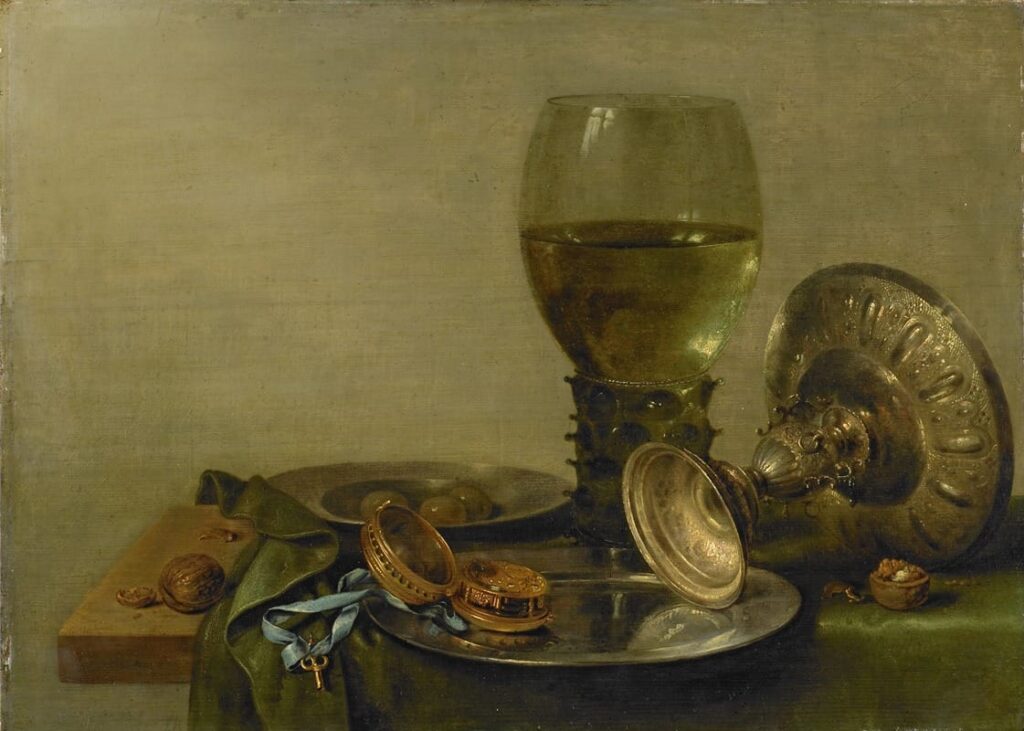
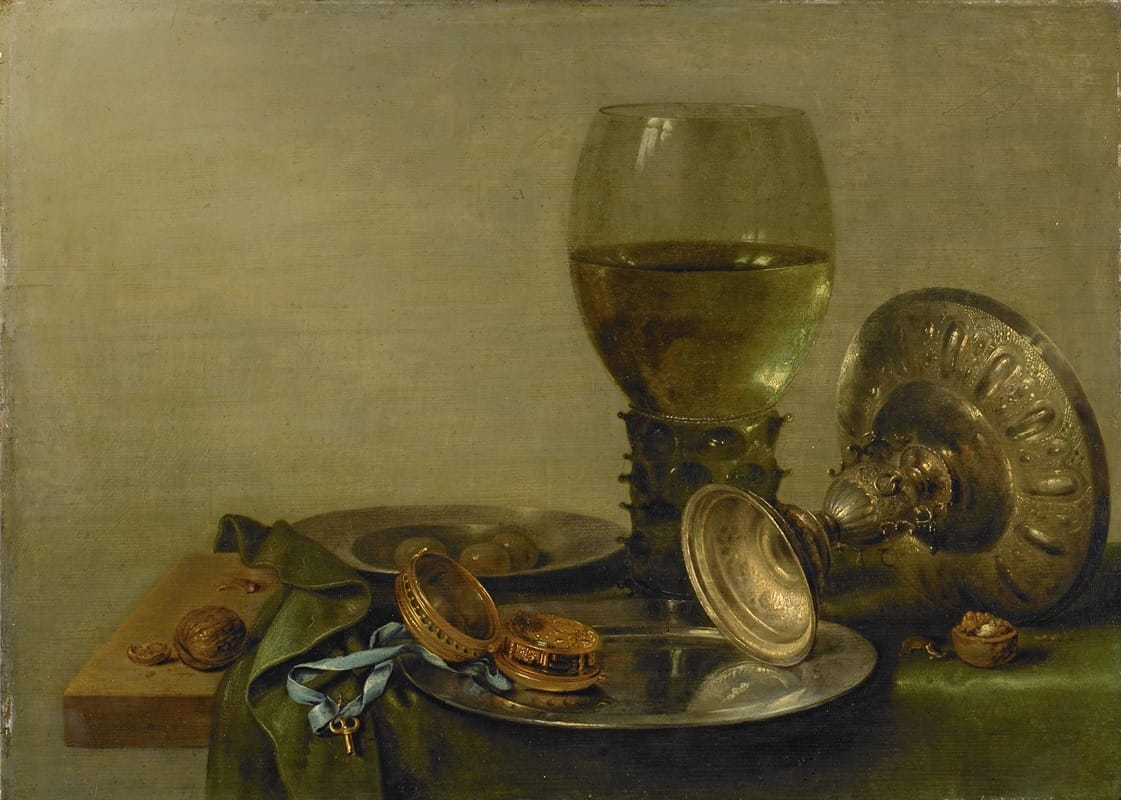


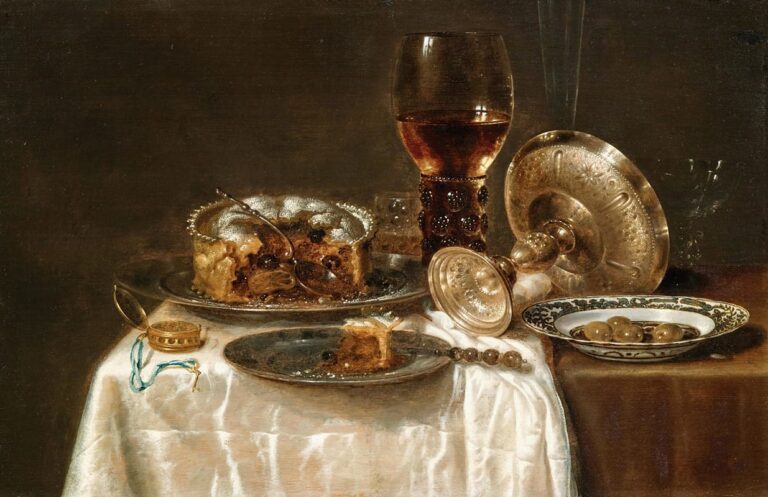
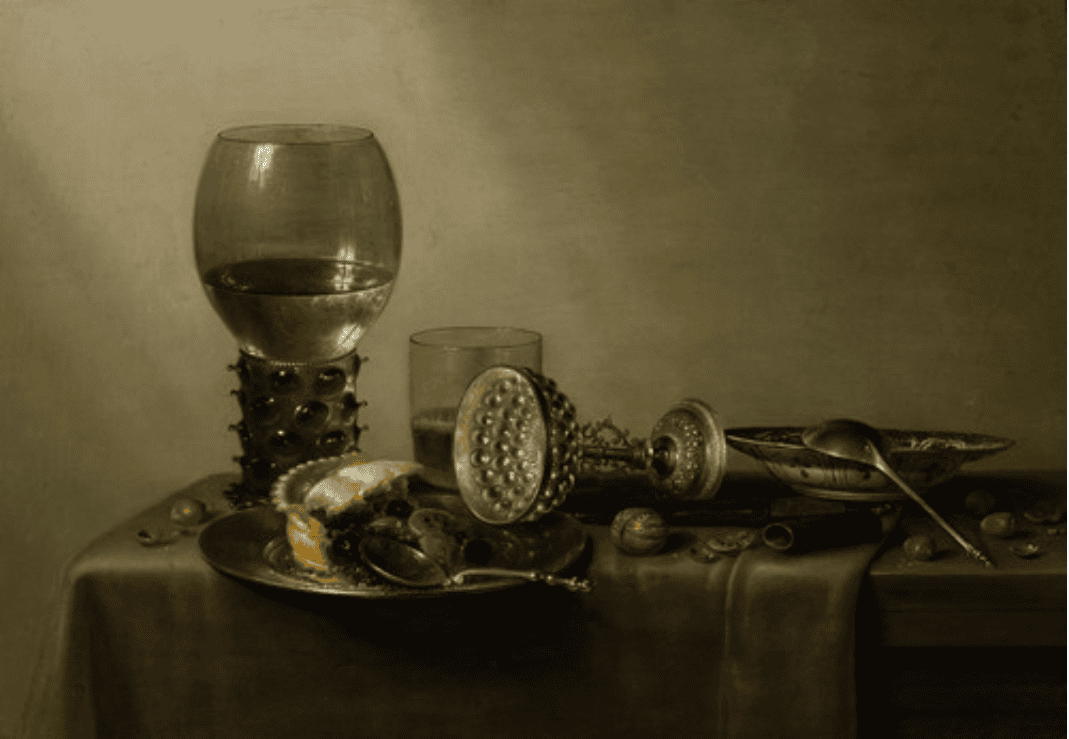
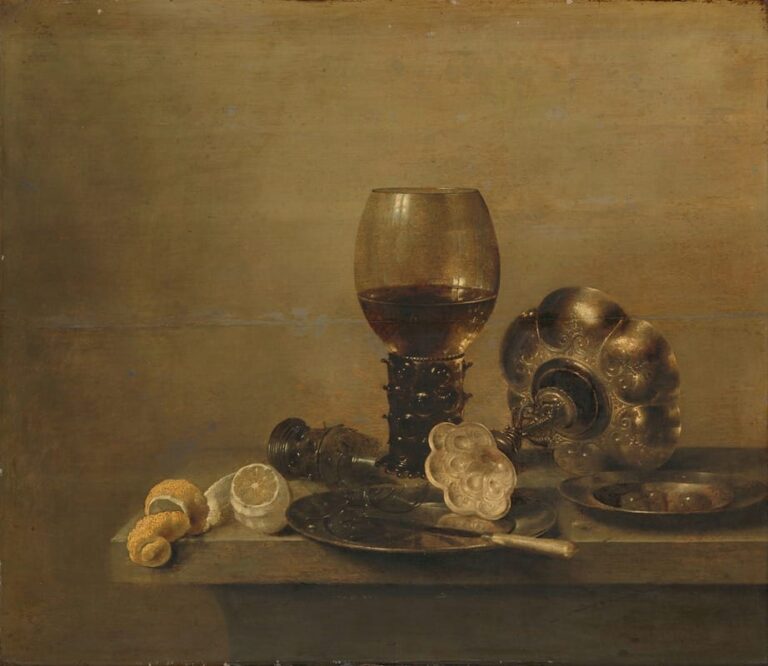
Our Dafen artist studio focuses on differentiating the two core materials. Painters respect the luminous refraction and transparency of the roemer glass, as well as the fluid, subtle highlights across the polished silver tazza. Smooth tonal transitions are maintained throughout. Bright highlights are carefully placed and shadows remain soft, preserving the calm understated quality that distinguishes Heda’s Haarlem style from more theatrical still-life works.
Interior Styling Guidance
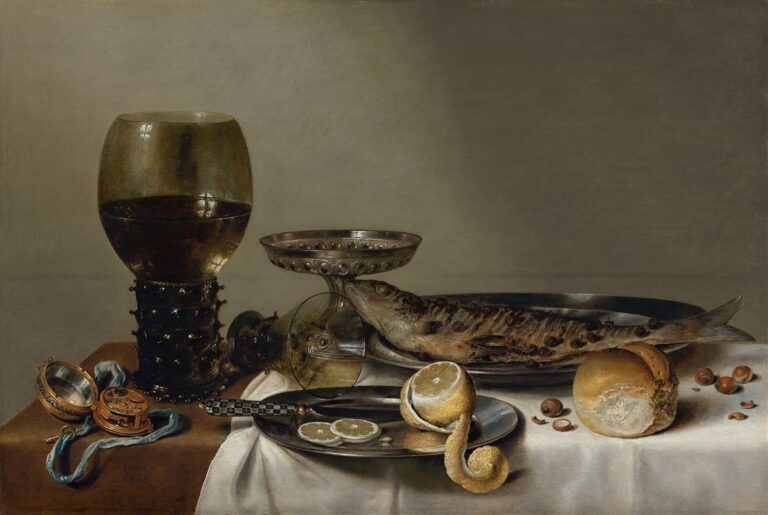
This compact, elegant still life suits traditional studies, dining nooks, library walls and transitional entry consoles. Warm stone grey, muted taupe and deep sage wall tones complement its neutral, earthy palette. It works well as a refined small focal piece or paired alongside other Heda still lifes to compare his varied arrangements of silver and glass.
Heda’s Early Tonal Realism
Dated 1630, this piece showcases Heda’s early mastery. He favours sparse, thoughtful arrangements rather than crowded feasts, directing all attention to how light behaves on glass and polished metal, the hallmark of his celebrated tonal realism.
Key Details
- Artwork: Still Life with Roemer and Silver Tazza, 1630
- Artist: Willem Claesz Heda (Dutch, 1594–1680)
- Type: hand-painted oil reproduction, not original artwork
- Style: Dutch Golden Age still life, tonal realism
- Original medium: oil on panel




Reviews
There are no reviews yet.